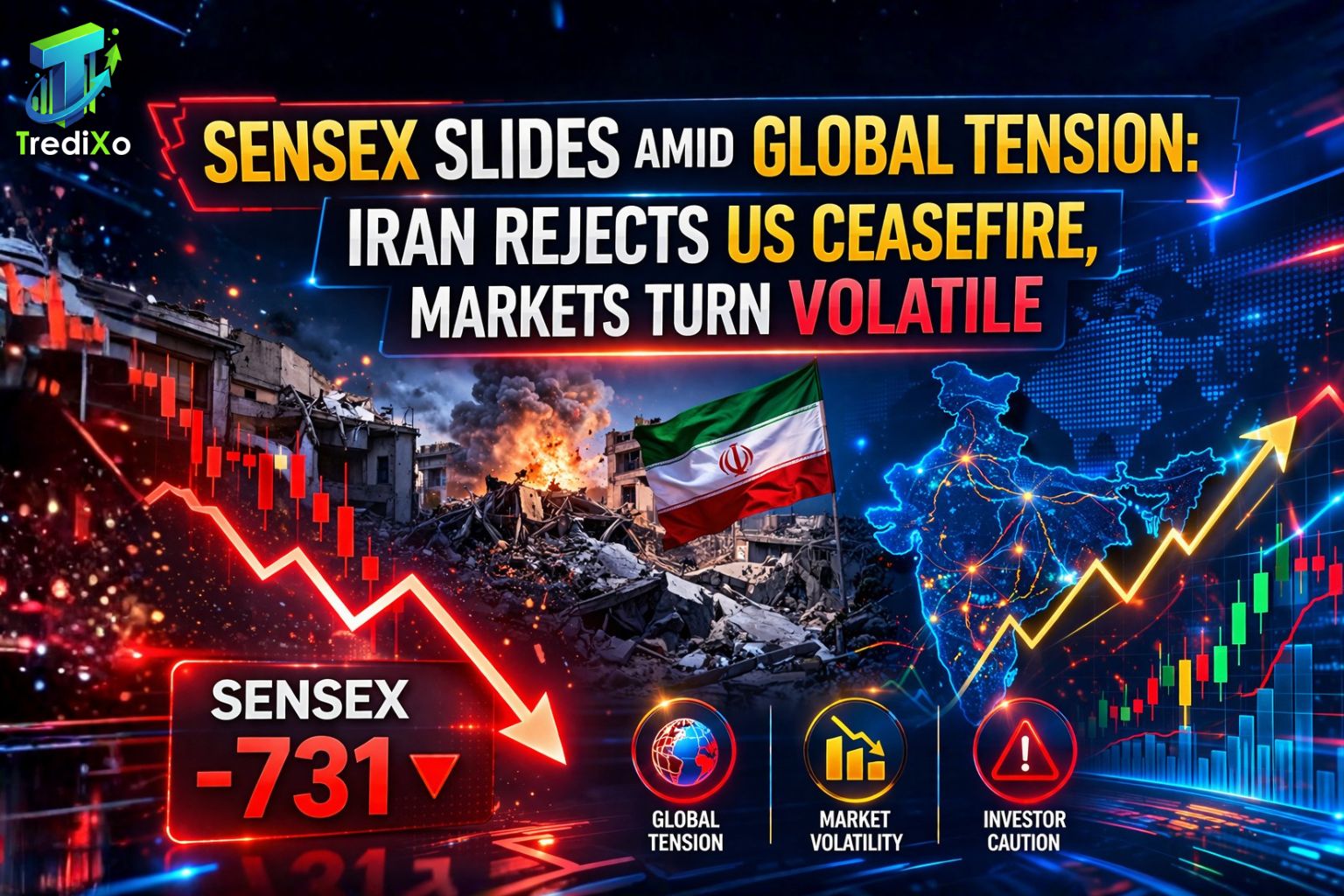
Sensex Slides Amid Global Tension: Iran Rejects US Ceasefire, Markets Turn Volatile
Indian stock markets opened on a weak note as the Sensex slipped amid rising global tensions. The decline came after Iran rejected a U.S. ceasefire proposal, triggering uncertainty across global financial markets. Early signals already pointed to weakness, with GIFT Nifty indicating a drop of around 0.75%, reflecting cautious investor sentiment.
Iran Rejects Ceasefire, Tensions Escalate
The key trigger behind the market fall is Iran’s firm rejection of a temporary ceasefire. Instead, Iran has demanded a “permanent end to the war,” signaling that the conflict may continue for a longer period.
This development has increased geopolitical risk globally. With no immediate resolution in sight, investors are worried about further escalation, especially after strong warnings from the U.S. side. The situation has turned fragile, and markets are reacting quickly to every update.
Oil Prices Add Pressure on Markets
One of the biggest concerns for Indian markets is the sharp rise in oil prices. Ongoing tensions in the Middle East—especially around the Strait of Hormuz—have pushed crude prices higher.
For India, which heavily depends on oil imports, rising crude prices directly impact inflation, trade balance, and economic growth. Higher fuel costs also hurt corporate margins, making equities less attractive in the short term.
Breaking News : Asia Markets Mixed as Trump’s Iran Warning Sparks Investor Nervousness
Why Sensex Is Falling
The fall in Sensex is driven by multiple factors:
- Rising geopolitical uncertainty
- Surge in crude oil prices
- Shift of investors toward safe assets
- Fear of inflation and slower growth
When global risk increases, foreign investors often pull money out of emerging markets like India. This leads to selling pressure on indices like Sensex and Nifty.
Inflation & Interest Rate Concerns
Higher oil prices often lead to inflation, which is another concern for investors. If inflation rises sharply, central banks may delay interest rate cuts or maintain tight policies.
This creates a negative environment for stock markets, as higher interest rates reduce liquidity and increase borrowing costs for businesses.
Sectoral Impact on Indian Market
The impact is not uniform across sectors:
- Negative Impact: Auto, aviation, FMCG (due to rising costs)
- Mixed Impact: Banking & IT
- Positive Impact: Oil & gas companies may benefit
This sector-wise movement is contributing to overall market volatility.
Volatility Becomes the Key Theme
Markets are currently highly volatile and “news-driven.” Any update related to the U.S.–Iran conflict is instantly affecting stock prices.
- Escalation → Markets fall
- Peace talks → Temporary rally
This pattern makes it difficult for traders and investors to predict short-term movements.
What Investors Should Watch
Going forward, key triggers include:
- Developments in U.S.–Iran conflict
- Movement in crude oil prices
- Foreign investor activity (FII flows)
- Central bank policy signals
Key Takeaways
- Sensex declined amid global geopolitical tension
- Iran rejected U.S. ceasefire proposal, increasing uncertainty
- Oil prices surged, impacting inflation and markets
- Investors shifted toward safer assets
- Market volatility is expected to remain high
Conclusion
The recent fall in Sensex highlights how deeply global events influence Indian markets. With Iran rejecting the ceasefire and tensions rising, uncertainty is likely to persist. Until there is clarity or de-escalation, markets may continue to remain volatile, keeping investors on edge.
Content Credit Goes To : Tredixo