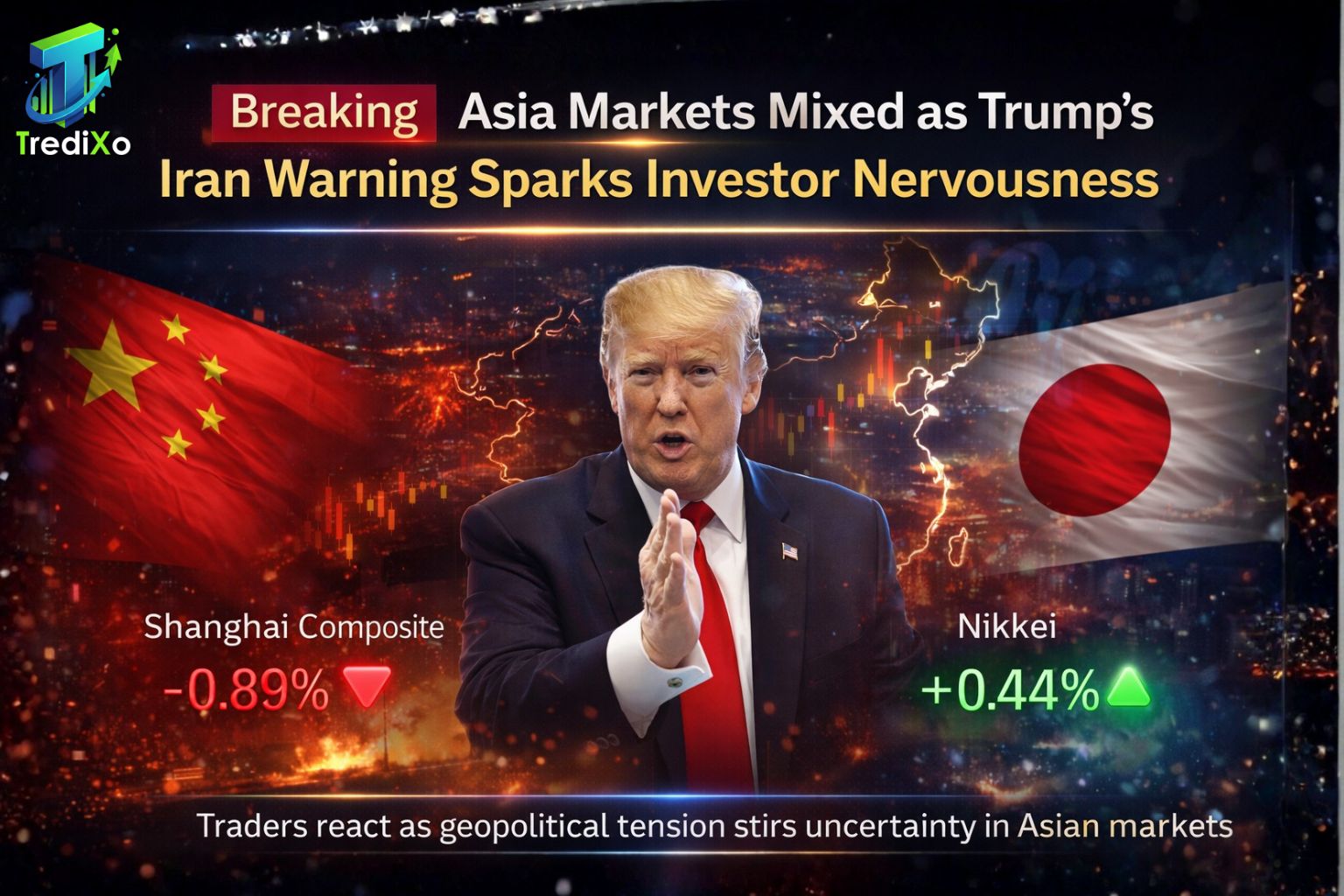
Breaking: Asia Markets Mixed as Trump’s Iran Warning Sparks Investor Nervousness
Asian stock markets opened on a mixed note as investors turned cautious following fresh warnings from Donald Trump regarding potential escalation in the Iran conflict. While some indices showed resilience, others slipped under pressure, reflecting uncertainty in global sentiment.
Markets in Japan and South Korea faced selling pressure, while a few regional indices managed to stay stable. This mixed performance clearly shows that investors are unsure about the direction markets may take in the coming days.
Geopolitical Tensions Drive Uncertainty
The primary reason behind this nervousness is the rising tension between the U.S. and Iran. Trump’s warning about possible military action has increased fears of further escalation. Iran has already taken a strong stance, rejecting ceasefire proposals and signaling resistance, which has added to global concerns.
Such geopolitical risks tend to shake investor confidence because they can quickly impact global trade, oil supply, and economic stability.
Oil Prices Add Pressure on Markets
Oil prices have surged sharply due to the ongoing conflict and supply disruptions, especially around the Strait of Hormuz—a key global oil route. Brent crude has crossed the $110 mark, increasing inflation fears worldwide.
For Asian economies, which rely heavily on oil imports, rising crude prices act as a major negative factor. Higher energy costs directly impact industries, transportation, and overall economic growth.
Why Some Markets Are Falling
Rising oil prices and geopolitical risks are pushing investors toward safer assets like gold and the U.S. dollar. This shift is causing equity markets to weaken.
Additionally, fears of stagflation—a combination of high inflation and slow growth—are increasing. Analysts believe that central banks may delay interest rate cuts due to rising energy costs, which further pressures stock markets.
Breaking News: Kalyan Jewellers Stock Surges on Q4 Beat, But Profit Booking Caps Gains
Impact on Asian Economies
The impact is particularly strong in Asia because many countries depend on Middle Eastern energy supplies. Disruptions are already affecting supply chains, manufacturing, and production costs.
Countries like Japan and South Korea are facing rising input costs, while businesses across sectors—from manufacturing to retail—are preparing for potential shortages and higher expenses.
Volatility Likely to Continue
Market experts believe that volatility will remain high in the near term. Every new headline related to the conflict is influencing market movements.
- Escalation → Markets fall, oil rises
- De-escalation → Temporary relief rally
This “headline-driven” market behavior is making trading conditions unpredictable.
What Investors Should Watch
Going forward, key factors to monitor include:
- Further statements from Donald Trump
- Developments in U.S.–Iran relations
- Movement in global oil prices
- Central bank policy signals
Key Takeaways
- Asian markets traded mixed amid geopolitical uncertainty
- Trump’s Iran warning triggered investor nervousness
- Oil prices surged above $110 per barrel
- Inflation and stagflation fears are rising
- Asian economies face higher costs due to oil dependency
- Markets are expected to remain volatile
Conclusion
Asian markets are currently walking a tightrope between resilience and risk. While some indices are holding steady, the broader sentiment remains cautious due to geopolitical tensions and rising oil prices. Until there is clarity on the U.S.–Iran situation, markets are likely to stay volatile, with investors closely watching every development.
Content Credit Goes To : Tredixo