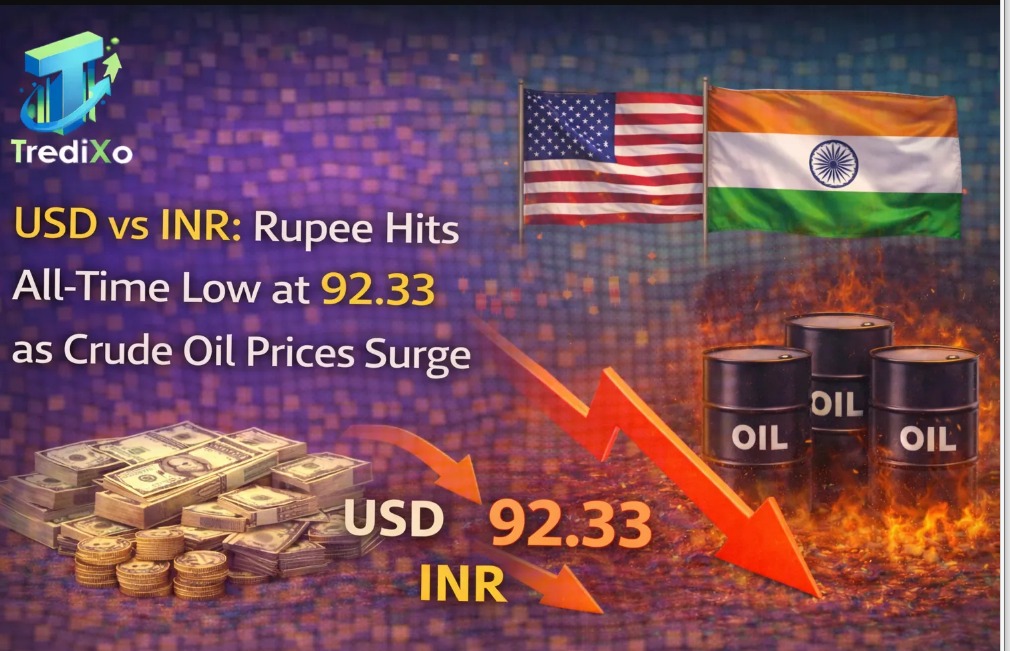
USD vs INR: Rupee Hits All-Time Low at 92.33 as Crude Oil Prices Surge

The Indian rupee fallen to a record low of 92.33 against the US dollar, reflecting growing pressure on the country’s currency as global crude oil prices continue to rise. The sharp depreciation in the rupee has raised concerns among investors, businesses, and policymakers, as currency movements play a significant role in India’s economic stability and trade balance.
One of the main reasons behind the rupee’s decline is the surge in crude oil prices in the international market. India imports a large portion of its oil requirements, and higher oil prices increase the country’s import bill. When the demand for US dollars rises to pay for these imports, the value of the rupee weakens against the dollar.
Global geopolitical tensions have also contributed to rising oil prices, which in turn have placed pressure on emerging market currencies, including the Indian rupee. When uncertainty increases in global markets, investors often move their funds toward stronger currencies like the US dollar, which is considered a safe asset during times of financial instability.
Another factor affecting the USD versus INR exchange rate is capital outflow from emerging markets. When global investors become cautious due to rising inflation or interest rate changes in major economies, they may withdraw investments from markets like India and move funds to developed economies. This outflow increases the demand for dollars and weakens the local currency.
A weaker rupee has mixed effects on the economy. On one hand, it makes imports such as crude oil, electronics, and machinery more expensive. This can increase inflation and affect businesses that rely heavily on imported raw materials. On the other hand, a weaker currency can benefit exporters because their products become more competitive in international markets.
Financial markets are closely monitoring the currency movement because fluctuations in the rupee can influence inflation, foreign investment flows, and economic growth. The Reserve Bank of India may also take steps to stabilize the currency if volatility continues in the foreign exchange market.
Experts believe that the direction of the rupee will largely depend on global oil prices, geopolitical developments, and the strength of the US dollar in the coming months. Investors and businesses are advised to stay cautious as currency markets remain sensitive to global economic changes.
Conclusion
The fall of the Indian rupee to a record low of 92.33 against the US dollar highlights the impact of rising crude oil prices and global market uncertainty. While currency depreciation can create challenges for the economy, it also reflects broader global financial trends. Monitoring oil prices, foreign investment flows, and global economic conditions will remain crucial for understanding the future movement of the rupee. All the content credit goes to Tredixo.
FAQ
Why did the rupee fall to a record low against the US dollar?
The rupee weakened mainly due to rising crude oil prices, increased demand for dollars, and global market uncertainty.
How do oil prices affect the rupee?
Higher oil prices increase India’s import bill, which raises demand for US dollars and puts pressure on the rupee.
Is a weaker rupee bad for the economy?
It can increase import costs and inflation, but it may also benefit exporters by making Indian goods cheaper globally.
What factors influence the USD versus INR exchange rate?
Oil prices, foreign investment flows, global economic conditions, and interest rate policies all influence the currency exchange rate.