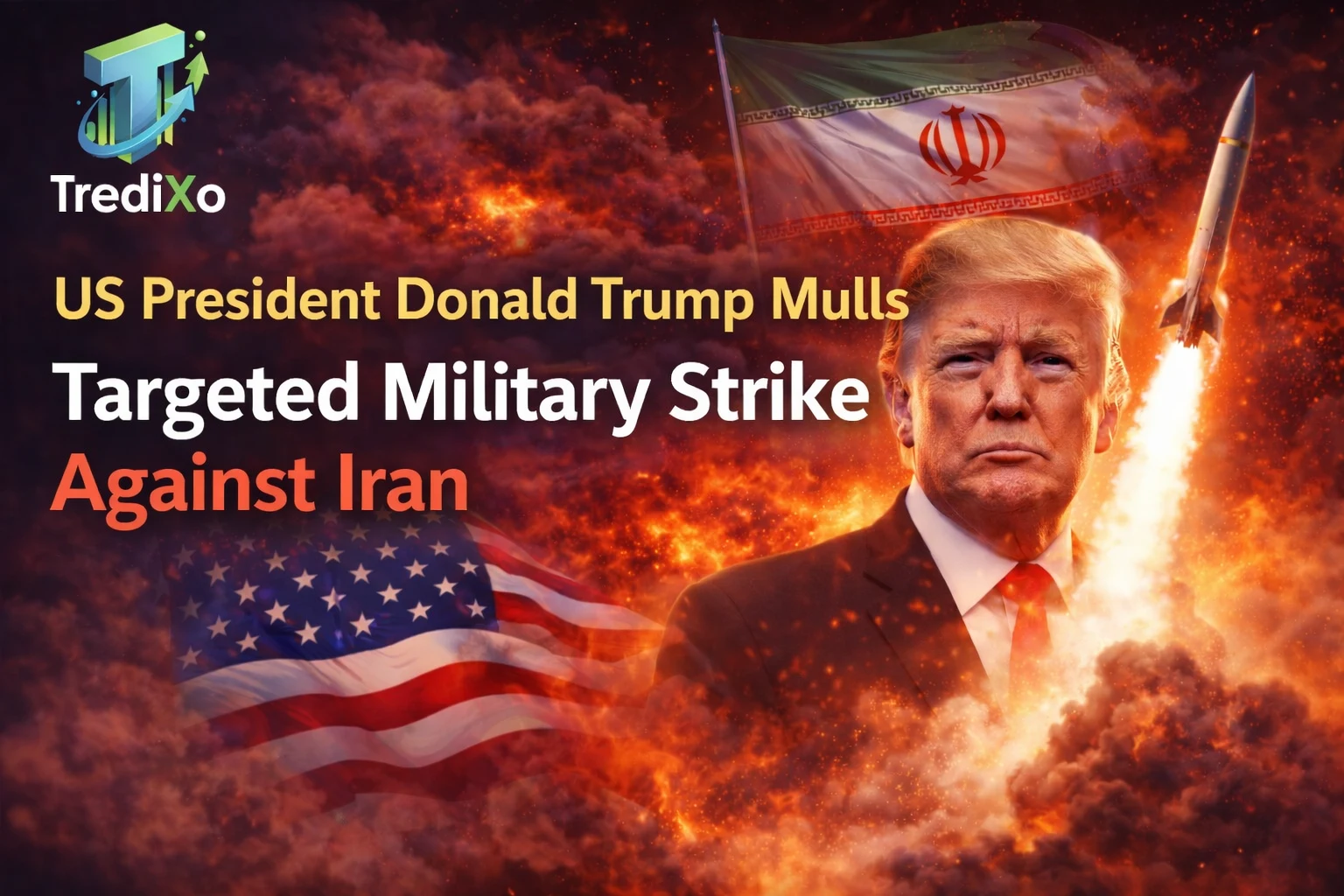
US President Donald Trump Mulls Targeted Military Strike Against Iran

Rising geopolitical tensions in the Middle East have intensified after U.S. President Donald Trump signaled that Washington is considering a targeted military strike against Iran. The development comes amid ongoing disputes over Iran’s nuclear program, regional security concerns, and increasing military activity across the Gulf region.
Recent reports suggest that the United States has been evaluating limited military options designed to pressure Iran while avoiding a full-scale war. These discussions have heightened global attention as markets, governments, and investors monitor the possibility of further escalation.
Background of the Rising US–Iran Tensions
Relations between the United States and Iran have remained strained for years, largely due to disagreements over nuclear activities, missile development, and regional influence in the Middle East. Negotiations aimed at limiting Iran’s nuclear program have struggled to produce a long-term agreement.
According to reports, President Trump confirmed he was considering a limited strike on Iranian targets, though no final decision had been made at the time of the announcement.
At the same time, the United States has increased military deployments in the region, including aircraft, warships, and additional troops. The buildup is intended to strengthen deterrence while providing the capability for rapid military action if required.
Military Developments and Regional Escalation
The situation escalated further after coordinated operations targeting Iranian facilities and infrastructure were reported earlier in 2026. These actions were linked to broader efforts aimed at limiting Iran’s military capabilities and preventing further nuclear development.
The conflict has already triggered retaliatory actions across the Gulf region, with missile and drone attacks reported against U.S. and allied targets. Military analysts warn that continued escalation could lead to a wider regional conflict involving multiple countries.
Some reports also indicate that Iran has warned it will defend itself against any aggression, raising fears that further military action could provoke significant retaliation.
Potential Impact on Global Markets
The geopolitical uncertainty surrounding the U.S.–Iran conflict is already influencing global financial markets. Investors often shift toward safe-haven assets such as gold and the U.S. dollar during periods of geopolitical risk.
Key potential impacts include:
- Oil price volatility due to concerns over supply disruptions in the Middle East
- Increased market uncertainty across global equities
- Rising demand for safe-haven assets like gold and bonds
- Possible inflation pressures if energy prices surge
The Strait of Hormuz, a critical global oil shipping route, remains a major concern. Any disruption there could significantly affect global energy markets and international trade.
Geopolitical Risks and Diplomatic Challenges
Despite rising tensions, diplomatic efforts are still ongoing. International leaders have urged restraint and called for renewed negotiations to prevent a broader conflict.
Experts believe the U.S. strategy may involve limited military pressure combined with diplomatic negotiations to force concessions from Iran. However, such a strategy carries significant risks if miscalculations occur.
Global powers including European nations and regional allies are closely monitoring the situation, as any escalation could destabilize the Middle East and disrupt global economic stability.
Conclusion
The possibility of a targeted U.S. military strike against Iran marks a critical moment in Middle Eastern geopolitics. While President Donald Trump has not confirmed a final decision, the discussions highlight the fragile balance between diplomacy and military action.
For investors and global markets, the situation introduces heightened uncertainty. Energy prices, safe-haven assets, and geopolitical risk premiums could remain volatile as developments unfold.
Ultimately, whether the crisis moves toward conflict or diplomatic resolution will depend on the decisions made by Washington, Tehran, and other global stakeholders in the coming weeks. All credit goes to Tredixo .
FAQ
1. Why is the United States considering a strike on Iran?
The U.S. is concerned about Iran’s nuclear program, missile development, and regional military activities. A targeted strike is being considered as a potential way to deter further escalation.
2. Has President Donald Trump ordered the strike yet?
No final decision has been confirmed. Trump stated that he was considering a limited military strike, but discussions and evaluations are still ongoing.
3. How could a US–Iran conflict affect global markets?
A conflict could increase oil prices, create volatility in global financial markets, and drive investors toward safe-haven assets like gold and government bonds.
4. What role does the Strait of Hormuz play in the conflict?
The Strait of Hormuz is one of the world’s most important oil shipping routes. Any disruption there could significantly affect global energy supplies and increase oil prices.
5. Is diplomacy still possible between the US and Iran?
Yes. Despite rising tensions, diplomatic talks and negotiations are still considered a possible path to de-escalate the crisis and avoid a wider conflict.