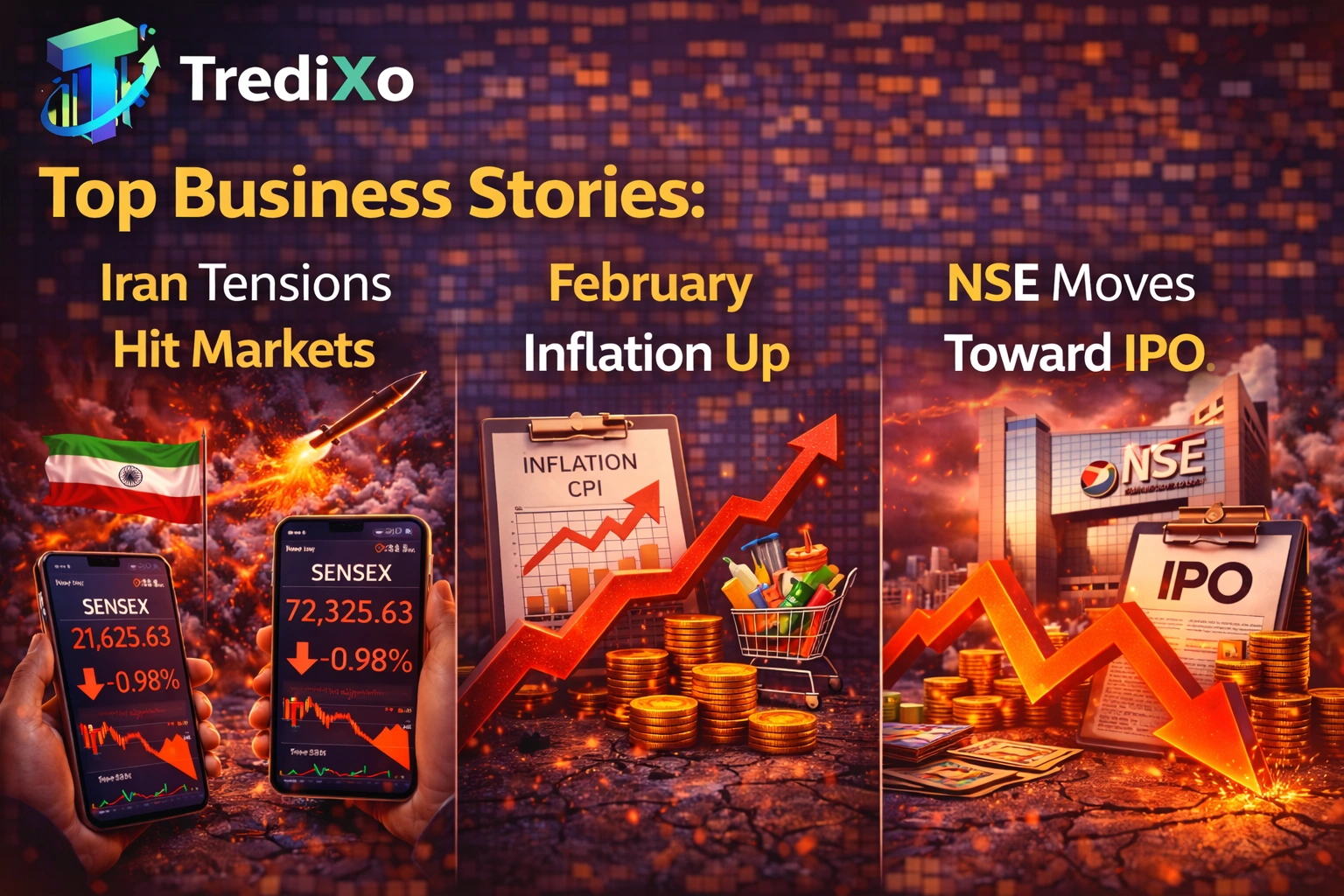
Top Business Stories: Iran Tensions Hit Markets, February Inflation Up, NSE Moves Toward IPO

Introduction to the current state of the global economy
The global economy is moving through a period of rapid change, with geopolitical tensions, inflation pressures, and major financial developments shaping business sentiment worldwide. Recent developments involving Iran tensions, rising inflation in February, and the NSE’s potential IPO have captured the attention of investors and business leaders.
Global conflicts often influence financial markets far beyond the regions directly involved. Rising tensions in West Asia have created uncertainty in energy markets, which in turn affects global investor sentiment and stock market movements.
At the same time, India’s February inflation data has sparked discussions among economists and business owners. Rising prices can influence consumer spending, corporate profitability, and economic growth.
Another important development comes from the National Stock Exchange (NSE), which is reportedly moving closer to launching its initial public offering (IPO). This potential move could significantly reshape the investment landscape in India.
For investors and entrepreneurs following Indian business news today, these developments highlight how global politics, economic data, and financial reforms are closely connected. Understanding how these events interact is essential for navigating today’s evolving economic environment.
Impact of tensions with Iran on the stock market
The growing tensions with Iran have created noticeable uncertainty across global financial markets. Whenever geopolitical conflicts intensify, investors tend to become cautious and reassess their exposure to risk.
One immediate impact is seen in stock market volatility. As uncertainty rises, traders often react quickly to news updates, which leads to sudden fluctuations in stock prices.
Energy markets are particularly sensitive to developments in West Asia because the region plays a major role in global oil production and supply chains. Concerns about potential supply disruptions can push crude oil prices higher, affecting businesses and economies worldwide.
For countries like India, which rely heavily on imported oil, rising energy prices can increase production costs for companies and reduce profit margins in several industries.
As tensions escalate, investors often move their funds into safer assets such as gold or government bonds, which can lead to selling pressure in equity markets.
Traders keeping track of stock market news today are closely monitoring geopolitical developments, as even small changes in international relations can quickly influence market sentiment and investment strategies.
Analysis of February's inflation rate and its effects on businesses
India’s February inflation rate has emerged as another major topic in business discussions. A rise in inflation generally indicates that the cost of goods and services is increasing, which can affect both businesses and consumers.
For many companies, higher inflation leads to increased operational costs. Raw materials, transportation, and manufacturing expenses often rise when inflation increases, making it more expensive for businesses to produce goods.
Companies then face a difficult decision. They can either absorb the higher costs and reduce profit margins, or pass the additional expenses on to consumers through price increases.
Both options come with risks. Raising prices may reduce consumer demand, while absorbing costs can hurt profitability.
Inflation also affects employees and wages. Workers often demand higher salaries to keep up with rising living expenses, which can increase payroll costs for businesses.
In response to these challenges, companies may adjust their strategies by improving operational efficiency, renegotiating supplier contracts, or revising pricing models.
Investors following Indian stock market analysis closely watch inflation trends because they influence interest rates, consumer behavior, and corporate performance.
NSE's move towards IPO and potential implications for investors
Another significant development in the business world is the National Stock Exchange’s move toward a potential IPO. The NSE is one of Asia’s largest and most influential stock exchanges, and its public listing has been anticipated for several years.
If the IPO proceeds successfully, it could become one of the most important financial events in India’s capital markets.
For investors, the NSE IPO could create new investment opportunities. A publicly listed exchange may attract both domestic and international investors who are interested in the long-term growth of India’s financial infrastructure.
The listing may also increase transparency and corporate governance, as publicly traded companies must follow stricter regulatory requirements and reporting standards.
Increased transparency often builds stronger investor confidence, which can benefit the overall market environment.
However, investors must also evaluate the risks associated with IPO investments. Market conditions, valuation concerns, and regulatory factors can influence the performance of newly listed companies.
For market participants tracking NSE IPO updates, this development could play a major role in shaping investment trends in the coming years.
Expert predictions for future business trends in light of these events
Experts believe that the combination of geopolitical tensions, inflation pressures, and major financial developments will influence future business trends.
Market analysts expect continued short-term volatility, especially if geopolitical tensions escalate or inflation remains elevated.
Businesses may respond by focusing on cost efficiency, supply chain resilience, and digital transformation to remain competitive in uncertain conditions.
Sustainability and responsible business practices are also expected to gain more attention. Many investors are increasingly prioritizing companies that focus on environmental and social responsibility.
Technology and innovation will continue to play a major role in shaping business growth. Companies that adapt quickly to technological changes are likely to maintain a competitive advantage.
While uncertainty remains in the short term, many analysts believe that strong economic fundamentals and growing consumer demand will support long-term growth in emerging markets like India.
Conclusion on managing risks and opportunities in today's volatile market
Today’s economic environment highlights the importance of balancing risk management with opportunity identification.
Geopolitical developments such as Iran tensions, rising inflation in February, and major financial moves like the NSE IPO all contribute to market uncertainty. However, they also create opportunities for investors who stay informed and maintain a disciplined approach.
Investors should focus on diversification, careful research, and long-term strategies rather than reacting emotionally to short-term market movements.
Staying updated with reliable financial information and monitoring economic indicators can help investors navigate the current market landscape more effectively.
In a rapidly changing global economy, those who remain adaptable and well-informed will be better positioned to manage risks and take advantage of future opportunities.
All the content credit goes to Tredixo.
FAQ
What are the main impacts of Iran tensions on global markets?
Tensions involving Iran and West Asia often increase market volatility because they can disrupt oil supplies, influence global trade routes, and create uncertainty among investors.
How has India's February inflation affected businesses?
Higher February inflation increases operational costs for companies and may force businesses to adjust prices, optimize expenses, or revise their financial strategies.
What does the NSE’s move toward an IPO mean for investors?
The potential NSE IPO could provide new investment opportunities and increase transparency within India’s financial markets, but investors should also evaluate risks before participating.
Where can I find updates on Indian business news today?
You can stay informed by following financial news platforms, market research websites, and official exchange announcements that regularly publish updates about business and economic developments.