Technical Analysis of Major Indices: Key Chart Patterns, Trendlines, and Indicators for Traders

Technical analysis plays a crucial role in helping traders understand market trends and identify potential trading opportunities in major global indices. Investors who trade indices such as Nifty 50, Sensex, Dow Jones Industrial Average, Nasdaq Composite, and the S and P 500 often rely on chart patterns, trendlines, and technical indicators to make informed decisions in dynamic market conditions.
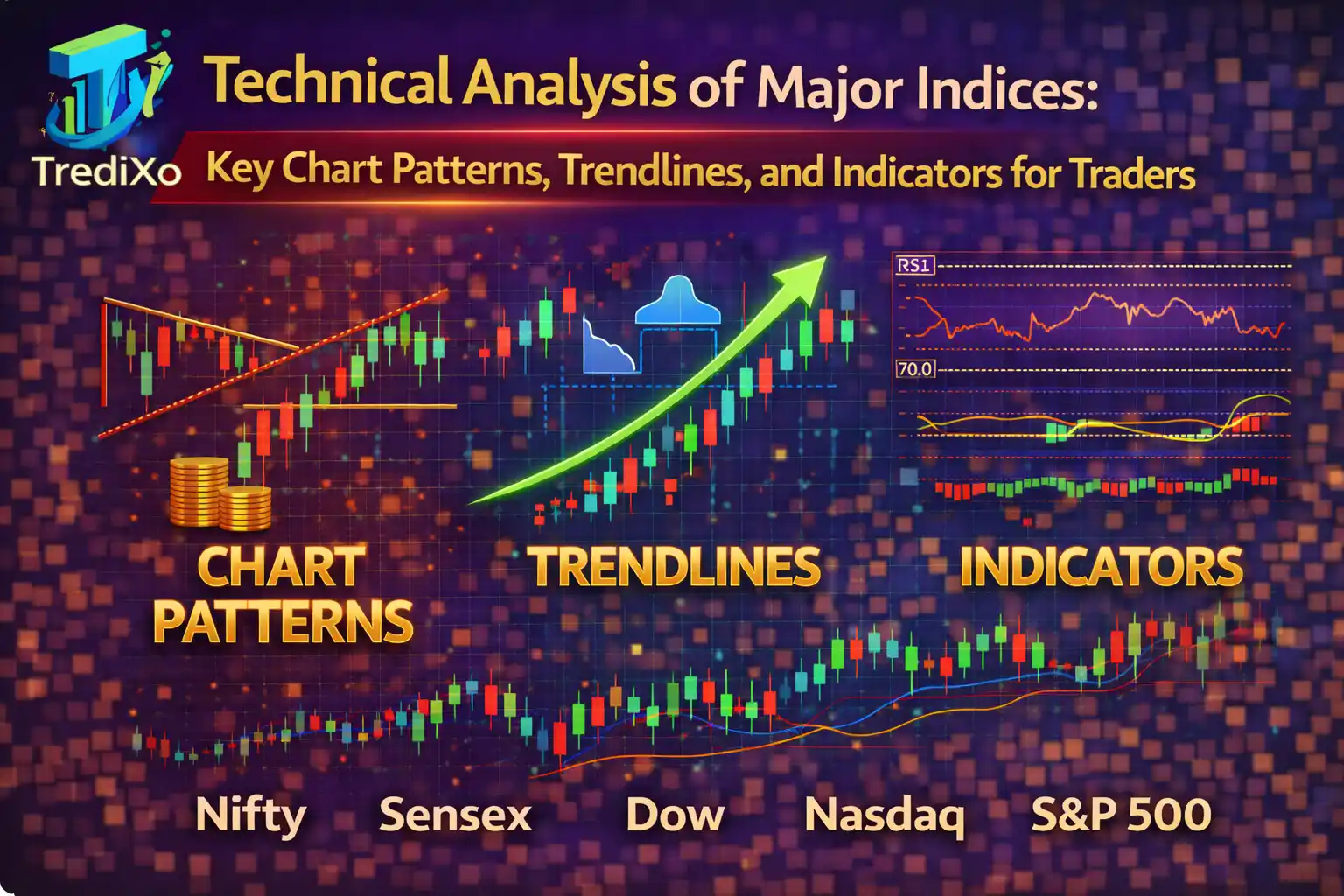
Chart patterns are one of the most widely used tools in technical analysis. Patterns such as head and shoulders, double top, double bottom, and triangles help traders identify potential trend reversals or continuation signals. These formations appear on price charts when market participants react to supply and demand changes, creating recognizable patterns that traders analyze for possible entry or exit points.
Trendlines are another important element of market analysis. A trendline is drawn by connecting multiple price points on a chart to show the direction of the market trend. An upward trendline indicates rising prices and strong buying momentum, while a downward trendline signals increasing selling pressure. Traders often use these lines to identify support and resistance levels that influence market movements in global indices.
Technical indicators also help traders analyze price behavior and momentum. Indicators such as moving averages, relative strength index, and momentum oscillators provide insights into whether an index is overbought or oversold. Moving averages, for example, smooth out price fluctuations and help traders identify the overall market direction.
Market experts emphasize that technical analysis works best when combined with proper risk management and awareness of broader economic conditions. Major economic announcements, corporate earnings, and geopolitical developments can influence market sentiment and cause sudden price movements in global indices.
For traders in highly liquid markets such as Nifty, Sensex, Dow Jones, Nasdaq, and the S and P 500, technical analysis provides a structured approach to understanding price trends and market psychology.
Conclusion
Technical analysis remains a valuable method for traders seeking to understand market behavior and identify potential opportunities. By studying chart patterns, trendlines, and indicators, traders can gain deeper insights into market trends and improve their ability to navigate global indices markets. All the content credit goes to Tredixo.
FAQs
What is technical analysis in trading?
Technical analysis is a method of studying price charts and indicators to predict future market movements.Why are chart patterns important for traders?
Chart patterns help traders identify potential trend reversals or continuation signals in the market.What is the purpose of trendlines?
Trendlines help traders visualize the direction of a market trend and identify support or resistance levels.Which indicators are commonly used in technical analysis?
Common indicators include moving averages, relative strength index, and momentum oscillators used to analyze price strength and trends.