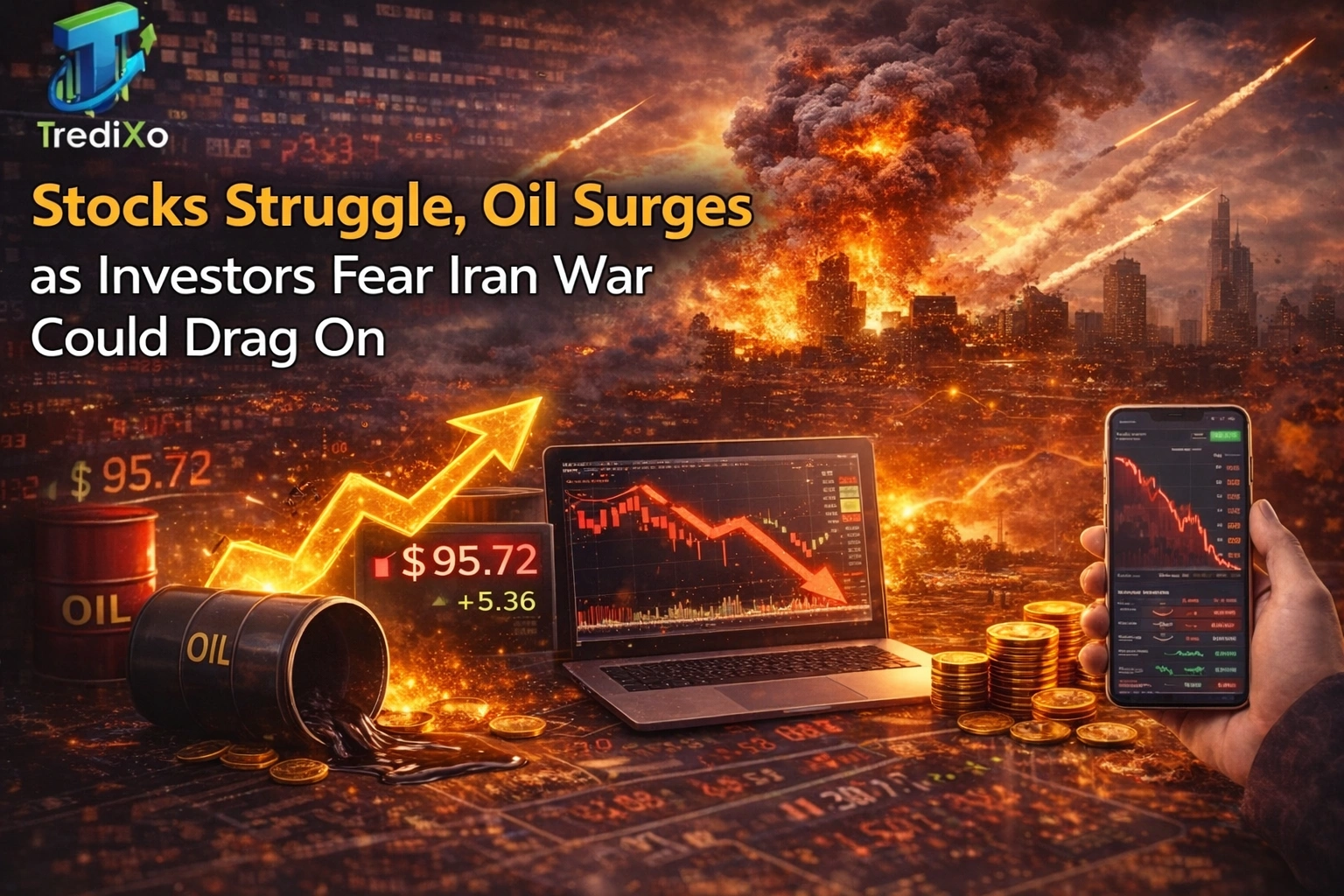
Stocks Struggle, Oil Surges as Investors Fear Iran War Could Drag On

Introduction to the current state of the stock market and oil prices
Rising geopolitical tensions in the Middle East are creating waves across the global financial landscape. The stock market is showing clear signs of struggle while oil prices surge, creating uncertainty for traders and long-term investors. With fears that the Iran conflict could drag on longer than expected, markets are reacting cautiously.
Investors around the world are closely watching developments in the region. Any escalation could disrupt global oil supplies, trigger market volatility, and influence the direction of both stocks and commodities. The relationship between stock markets and oil prices has become particularly noticeable as geopolitical tensions intensify.
As a result, many investors are reconsidering their strategies. Some are shifting toward safer assets, while others are seeking opportunities in sectors that benefit from rising energy prices. Understanding the current situation is essential for navigating these uncertain market conditions.
Impact of tensions with Iran on the market
Growing tensions with Iran have sent shockwaves through global financial markets. Investors are increasingly worried about the possibility of a prolonged conflict in the Middle East, which could significantly affect energy markets and international trade.
When geopolitical risks increase, uncertainty spreads quickly across stock markets. Traders become cautious, and many prefer to reduce exposure to risky assets. This leads to increased volatility and sudden fluctuations in major stock market indices.
The energy sector, however, often reacts differently. Rising geopolitical tensions frequently push oil prices higher, which can benefit energy companies and oil-related stocks. Meanwhile, sectors dependent on stable fuel costs—such as transportation and manufacturing—may experience pressure.
Investor sentiment tends to shift rapidly during such periods. Every development in the Middle East can trigger immediate reactions in global markets, making trading conditions unpredictable.
The possibility that the Iran war could drag on is particularly concerning. A prolonged conflict could keep markets on edge for an extended period, influencing investment decisions worldwide.
Analysis of recent stock performance and oil prices
Recent market performance highlights a clear contrast between struggling stocks and surging oil prices. Major stock market indices have experienced volatility as investors respond to geopolitical uncertainties.
Concerns about a prolonged conflict have dampened investor confidence. Analysts warn that escalating tensions could negatively impact corporate earnings, global trade, and overall economic growth.
At the same time, crude oil prices have been climbing steadily. Traders fear that disruptions in the Middle East—one of the world’s most important oil-producing regions—could limit global supply.
These fears have pushed oil prices higher as investors anticipate possible shortages. Energy traders are closely monitoring shipping routes, production levels, and diplomatic developments.
This creates an unusual market dynamic where energy commodities gain strength while the broader stock market struggles. The divergence between these sectors highlights how geopolitical events can influence financial markets in different ways.
How investors are reacting to the news
Investor reactions to the escalating tensions have been swift. Many market participants are shifting toward safe-haven assets such as gold, government bonds, and defensive stocks.
This move reflects a traditional market response during periods of geopolitical risk. Investors often prioritize preserving capital rather than chasing higher returns.
At the same time, some traders see opportunity in the energy sector. Rising oil prices can lead to significant gains for oil companies and energy-related stocks, attracting investors looking to benefit from the surge.
Market volatility has also increased dramatically. Traders are responding quickly to headlines and political developments, which leads to sharp movements in stock prices and commodities.
Financial analysts recommend maintaining a balanced approach. By diversifying investments across multiple sectors, investors can reduce exposure to sudden market swings caused by geopolitical tensions.
Possible outcomes and long-term effects on the market
The future impact of the Iran conflict on global markets will largely depend on how the situation evolves. Several possible scenarios could shape the long-term outlook.
If tensions escalate into a larger conflict, oil prices could rise even further. Higher energy costs would likely increase inflation pressures, affecting businesses and consumers worldwide.
Industries heavily reliant on fuel—such as transportation, aviation, and manufacturing—could experience declining profit margins. This could further weigh on stock market performance.
However, if diplomatic negotiations succeed and tensions ease, financial markets may stabilize quickly. Investors could regain confidence, allowing stocks to recover from recent losses.
In a prolonged conflict scenario, countries that rely heavily on imported energy may face greater economic challenges. Meanwhile, energy-exporting nations and oil companies could benefit from sustained high prices.
These potential outcomes highlight the importance of monitoring geopolitical developments closely.
Expert predictions and advice for investors
Market experts suggest that investor caution is essential as geopolitical tensions continue to influence global markets.
Financial advisors emphasize the importance of portfolio diversification during uncertain times. Investing across multiple asset classes—including stocks, commodities, and bonds—can help reduce risk.
Some analysts recommend focusing on energy stocks and companies that benefit from rising oil prices. These sectors often perform well during geopolitical conflicts that disrupt oil supplies.
Experts also advise investors to monitor macroeconomic indicators, including inflation rates, interest rates, and global economic growth. These factors will likely shape market performance in the months ahead.
Staying informed about developments in the Middle East is equally important. Political events can quickly influence both oil markets and stock prices, making timely information critical for effective decision-making.
Conclusion: The importance of staying informed and diversified during uncertain times
Periods of geopolitical uncertainty remind investors of the importance of staying informed. Developments such as the Iran war impact on global markets can quickly shift financial conditions.
Understanding how geopolitical tensions influence oil prices, stock markets, and investor sentiment allows individuals to make more strategic investment decisions.
Diversification remains one of the most effective ways to manage risk. By spreading investments across different sectors and asset classes, investors can protect their portfolios against sudden market shocks.
Regularly reviewing investment strategies and monitoring global economic trends can also help investors stay ahead of potential market disruptions.
While uncertainty may continue in the short term, disciplined investing and careful planning can help navigate volatile market environments successfully. All the content credit goes to Tredixo.
FAQ
What is the Iran war impact on global markets?
The Iran conflict can create uncertainty in global financial markets, leading to rising oil prices and increased stock market volatility.
How are oil prices affected by the Iran conflict?
Escalating tensions raise concerns about oil supply disruptions, which typically push crude oil prices higher.
Why do stock markets fall as oil rises?
Higher energy costs can reduce corporate profits and slow economic growth, which often leads to declines in the stock market.
What should investors monitor during Middle East tensions?
Investors should track geopolitical developments, oil production data, and global economic indicators.
Is diversification still a good strategy during geopolitical conflicts?
Yes. Portfolio diversification helps reduce risk and provides stability during periods of market volatility.