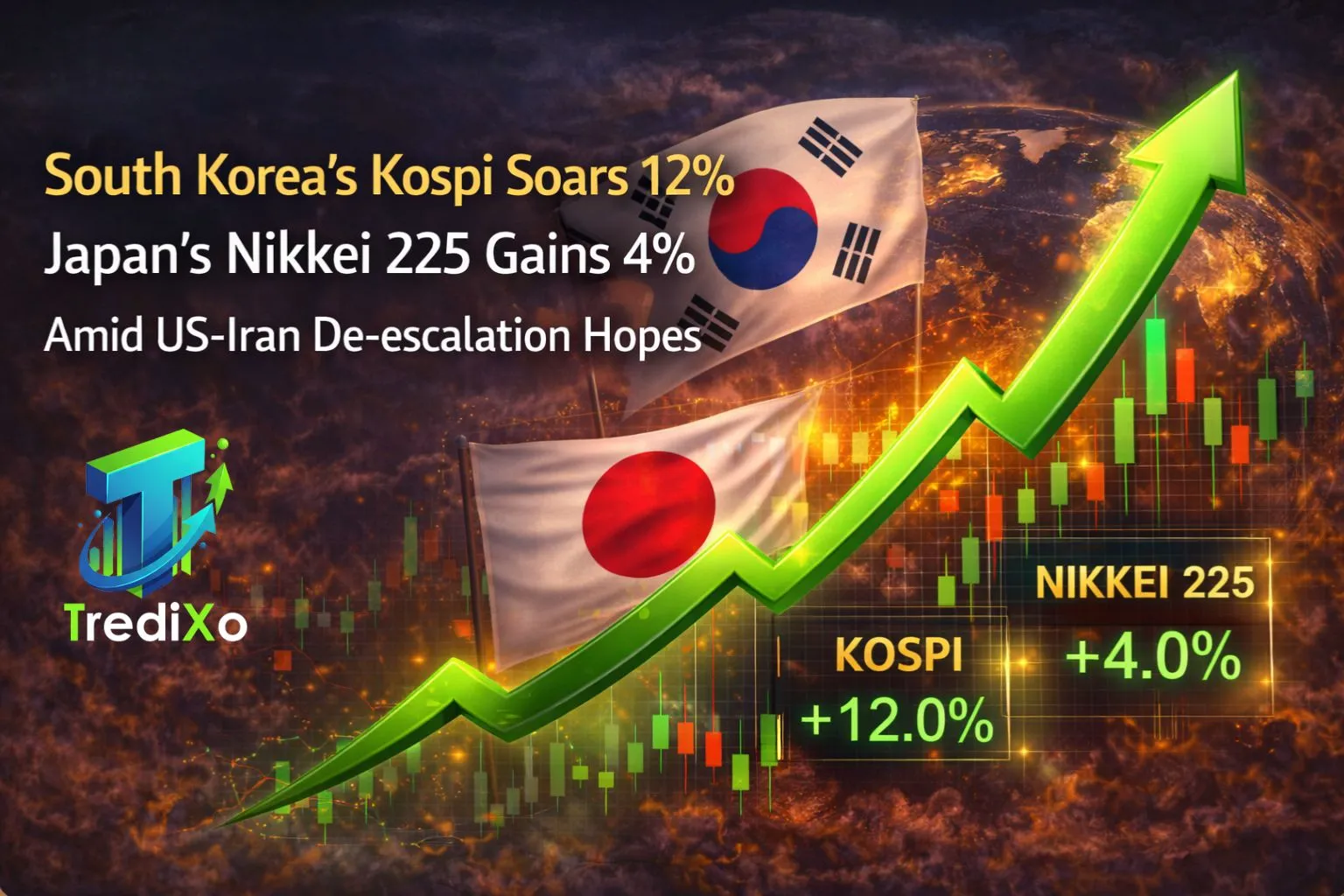
South Korea's Kospi Soars 12%, Japan's Nikkei 225 Gains 4% Amid US-Iran De-escalation Hopes
South Korea's Kospi Soars In a dramatic shift, Asian stock markets saw a remarkable rebound on recent news of de-escalation efforts in the ongoing US-Iran conflict. The South Korean Kospi surged by 12%, while Japan's Nikkei 225 gained a solid 4%, signaling a positive market sentiment driven by hopes for a peaceful resolution.
Global Tensions and Their Impact on Asian Markets
The tensions between the US and Iran have been a significant factor affecting global markets. As the situation in the Middle East escalated, investors fled to safe-haven assets like gold, and oil prices surged, leading to increased volatility in global financial markets. The uncertainty surrounding the conflict had left market participants on edge, particularly in emerging markets like South Korea and Japan, whose economies are sensitive to global developments.
However, recent signs of de-escalation in the US-Iran conflict have shifted sentiment dramatically. The optimism sparked by discussions of a diplomatic resolution has provided much-needed relief to Asian markets, particularly as investors began to feel more confident in the stability of the region.
Kospi's 12% Surge: Key Drivers
The South Korean Kospi index experienced a 12% surge, driven by optimism surrounding the easing geopolitical tensions and improved investor confidence. The Kospi's performance has been heavily influenced by the technology sector, with Samsung Electronics and other major companies in the sector leading the charge. Positive earnings reports and the rebound in global tech stocks have been significant contributors to the rise.
Foreign Institutional Investors (FIIs) who had previously been selling off stocks in South Korea began reversing their positions, leading to strong buying activity. South Korea's economy is also closely linked to the global technology and automotive industries, both of which benefit from a more stable geopolitical environment.
Nikkei 225’s 4% Gain: Optimism Returns
Japan's Nikkei 225 also saw a substantial 4% increase, fueled by a combination of factors. Firstly, the de-escalation of US-Iran tensions played a role in improving market sentiment. Additionally, the Japanese yen had weakened slightly, making exports more competitive. This contributed to the rally in export-heavy companies like Toyota and Sony.
Japan's economy had been struggling due to both domestic challenges, such as sluggish growth, and external pressures from the global trade war. But with the easing of tensions, Japanese exporters saw a renewed interest, particularly in the automotive and electronics sectors.
Market Sentiment: What’s Next?
The optimism seen in the Kospi and Nikkei 225 reflects broader trends of recovery in Asian markets. However, while the immediate news of US-Iran de-escalation has provided a temporary boost, analysts caution that the underlying risks of geopolitical conflict and global economic uncertainties still remain.
Global investors will be keeping a close eye on any developments related to the US-Iran conflict, as well as economic indicators from major economies such as the US, China, and Japan. If the tensions between the two nations rise again, it could quickly reverse the market gains seen today.
Breaking News : Share Market Drops
Investment Implications: How to Navigate the Current Market
For investors looking to capitalize on the recent gains, focusing on sectors like technology, automotive, and export-driven industries could provide solid opportunities. South Korea and Japan's tech giants, particularly Samsung Electronics and Sony, remain good bets for those looking to invest in the rebound.
However, it is essential to maintain caution. Geopolitical risks remain high, and volatility is likely to continue. Investors should also be mindful of the interest rate policies in the US, which could affect global markets in the coming months.
Conclusion
Asian stock markets, especially South Korea's Kospi and Japan's Nikkei 225, have surged as hopes for a peaceful resolution to the US-Iran conflict take hold. While this has brought a wave of optimism, investors should stay informed about potential developments in the geopolitical landscape, which could lead to further volatility. For now, the market is enjoying a well-needed reprieve, with technology and export sectors leading the way.
Key Takeaways:
- South Korea’s Kospi surged 12%, driven by positive sentiment in the tech sector and easing geopolitical tensions.
- Japan’s Nikkei 225 rose 4% on optimism over the de-escalation of the US-Iran conflict and a weaker yen.
- Technology and export sectors are leading the rally in both markets.
- Investors should remain cautious of potential geopolitical risks and global economic uncertainties.
FAQ
1. Why did South Korea’s Kospi rise so sharply?
The Kospi surged by 12% due to easing US-Iran tensions, positive earnings reports from major companies, and improved investor sentiment, particularly in the tech sector.
2. How did the US-Iran de-escalation affect Japanese markets?
The de-escalation improved market sentiment, particularly benefiting Japanese export-driven companies like Toyota and Sony, as a weakened yen made Japanese goods more competitive.
3. What sectors performed well in South Korea and Japan?
The technology and export sectors saw strong performance, with companies like Samsung Electronics and Toyota benefiting from the geopolitical shift.
4. Is the rally sustainable?
While the rally is fueled by optimism, geopolitical risks remain high. Investors should monitor any new developments in the US-Iran conflict and global economic conditions.
5. What should investors focus on in the current market?
Investors should focus on technology stocks, particularly in South Korea and Japan, and consider sectors like automotive and export-driven industries. However, caution is advised given the ongoing global risks.
All credit goes to Tredixo.