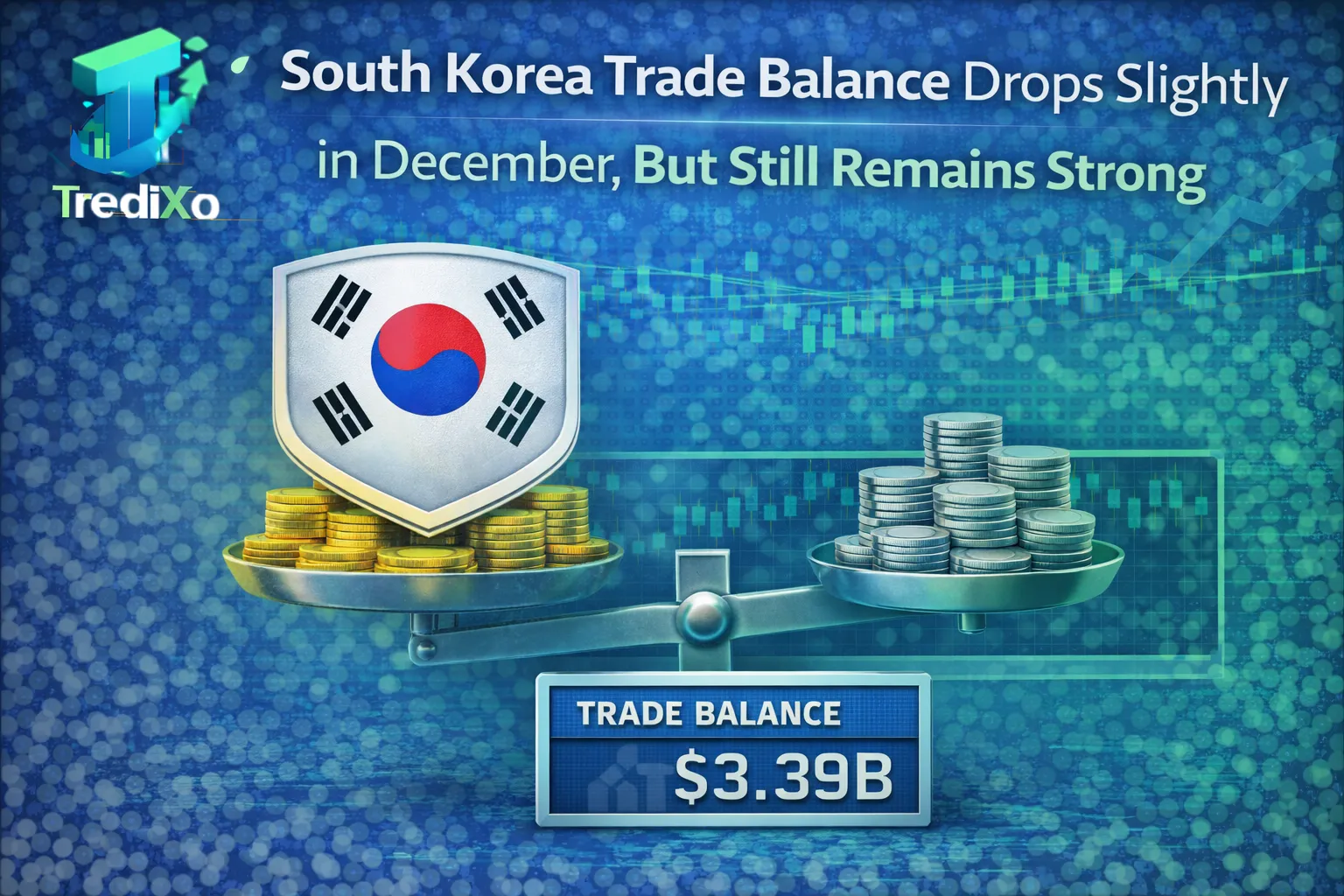
South Korea Trade Balance Drops Slightly in December, But Still Remains Strong

South Korea’s trade balance has always been a key measure of its economic strength. Known for its powerful export-driven economy, the country has consistently maintained a healthy trade surplus over the years.
However, the latest data from December shows a slight decline in the trade surplus, raising concerns among investors and analysts. While the drop is not drastic, it highlights changing global trade conditions that could impact South Korea’s future economic performance.
Impact on the Korean Economy
The small decline in South Korea’s trade balance does not necessarily signal weakness, but it does reflect shifting dynamics.
On the positive side, the country continues to benefit from strong exports, especially in sectors like:
- Technology
- Semiconductors
- Machinery
These industries play a major role in supporting GDP growth, job creation, and overall economic stability.
At the same time, rising imports can have mixed effects. While higher imports may indicate strong domestic demand, they can also increase competition for local manufacturers, forcing them to adapt quickly.
Go Here : Hindustan Zinc, Hindustan Copper Slip Up to 5% as Metal Prices Crash
Future Outlook for Trade Balance
Looking ahead, experts believe that South Korea’s trade balance will depend heavily on global economic conditions.
Some key factors to watch include:
- Geopolitical tensions affecting global trade flows
- Supply chain disruptions impacting exports
- Demand trends in major markets like China and the US
Despite these challenges, certain sectors such as technology and green energy are expected to perform well, offering hope for continued trade stability.
Conclusion
South Korea’s trade surplus remains a strong pillar of its economy, even with the slight dip seen in December. The country’s export strength continues to support growth, but global uncertainties could influence future trends.
For investors and businesses, keeping a close eye on global trade developments will be essential. While short-term fluctuations are normal, South Korea’s long-term outlook remains relatively stable due to its strong industrial base.
All credit goes to Tredixo.
FAQ
What is the current status of South Korea’s trade balance?
South Korea still maintains a trade surplus, although there was a slight decline in December.
How are exports and imports performing?
Exports remain strong in key sectors, while imports are fluctuating due to global demand and supply chain factors.
How do global conditions affect South Korea’s trade?
Changes in global demand, geopolitical tensions, and supply chain issues directly impact exports and imports.
What is the future outlook for the trade balance?
Experts are cautiously optimistic, expecting stable performance supported by strong industries like technology.
Where can I track South Korea’s economic data?
Reliable sources include Statistics Korea, the Bank of Korea, and major financial news platforms.
All content credit goes to Tredixo.