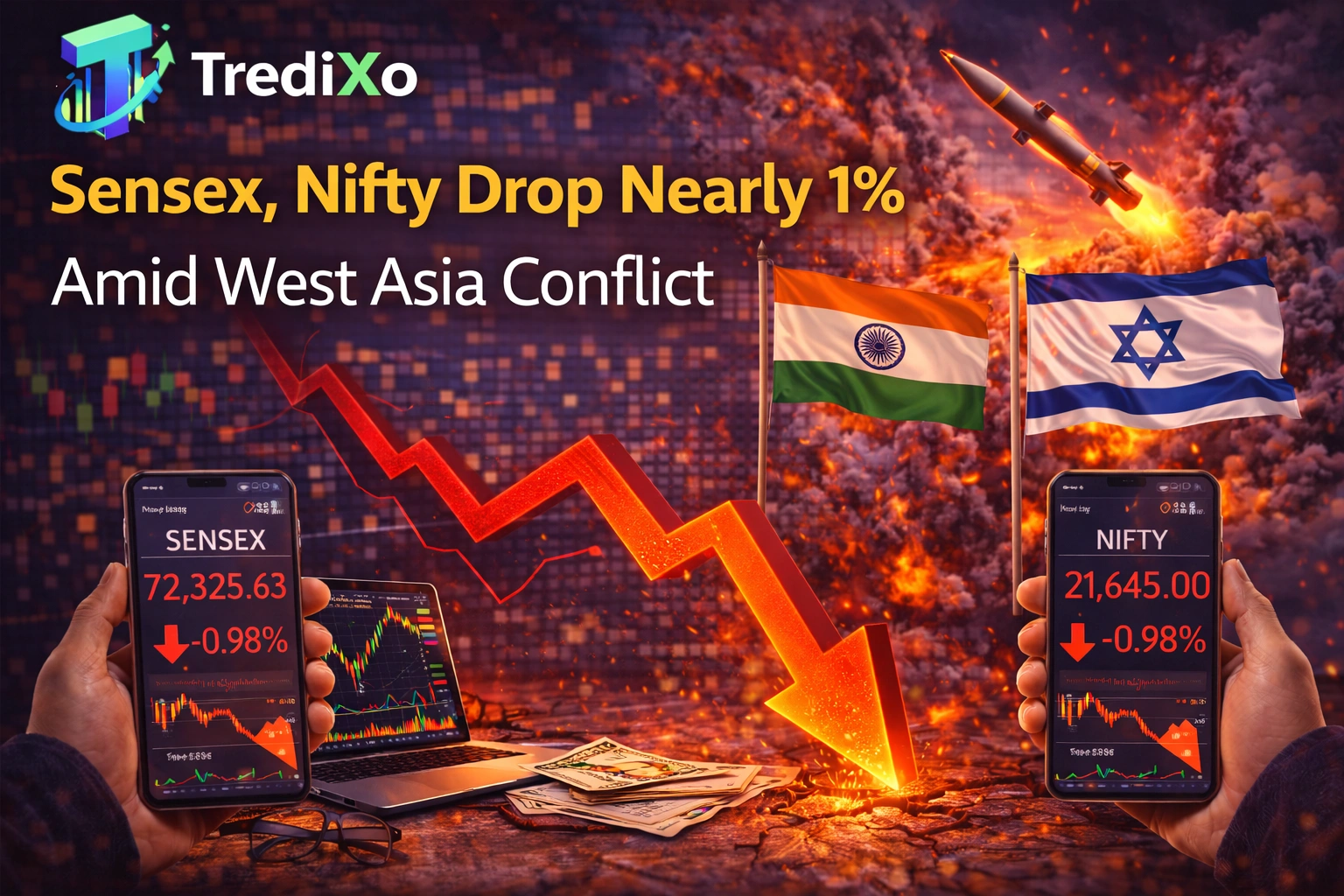
Sensex, Nifty Drop Nearly 1% Amid West Asia Conflict

Introduction to the Indian Stock Market
The Indian stock market is often seen as a reflection of the country’s economic strength and investor confidence. Movements in major indices like the Sensex and Nifty usually indicate how investors are reacting to both domestic and global developments.
Recently, the market faced fresh pressure as rising geopolitical tensions in West Asia created uncertainty across global financial markets. As a result, the Sensex and Nifty dropped nearly 1%, causing concern among investors and traders.
Geopolitical conflicts often have far-reaching effects on stock markets. Even though the conflict may occur in another region, global markets react quickly due to interconnected economies, trade routes, and energy supplies.
The Sensex fall today and the decline in the Nifty index highlight how international events can influence investor sentiment in India. Investors closely tracking stock market news today are watching the situation carefully to understand how these developments could affect their portfolios.
For traders and long-term investors alike, understanding these market reactions is essential when planning investment strategies during uncertain times.
Impact of West Asia Conflict on Sensex and Nifty
The recent West Asia conflict has created significant uncertainty across global markets. Whenever geopolitical tensions rise in critical regions, investors often move their money away from riskier assets like equities.
This cautious approach has directly impacted the Indian stock market today, leading to a decline in both the Sensex and Nifty, which dropped nearly 1% during the trading session.
One of the main concerns is the potential increase in crude oil prices. West Asia is a key oil-producing region, and any disruption to supply can lead to higher oil prices worldwide.
For India, which imports a large portion of its crude oil, rising prices can increase costs for businesses and affect economic growth. This creates pressure on several sectors, including transportation, manufacturing, and energy.
As oil prices rise, investors often become cautious about corporate profit margins. This concern spreads across the market, causing broader selling pressure.
Market participants also keep a close eye on global sentiment through Nifty 50 market updates, which help traders understand how international developments may influence Indian markets.
During times of global conflict, investors often shift toward safer assets such as gold or government bonds, which can temporarily weaken equity markets like the Sensex and Nifty.
Factors Influencing the Stock Market
The stock market is influenced by a wide range of factors that shape daily price movements.
One of the most important factors is economic data. Indicators such as inflation rates, GDP growth, employment figures, and interest rates can significantly influence investor sentiment.
Global events also play a major role. Conflicts, trade tensions, and political instability can create uncertainty, which often leads to short-term market declines.
Corporate earnings are another key driver. When large companies report strong profits, indices like the Sensex and Nifty tend to rise. On the other hand, weak earnings reports can lead to selling pressure.
Interest rate decisions by central banks also impact markets. Lower interest rates usually encourage investment and spending, while higher rates can slow economic activity.
Investor psychology is equally important. Fear and optimism can quickly shift trading behavior, sometimes causing sudden market movements.
Investors monitoring Indian stock market analysis often consider all these factors together to understand the broader market trend.
Strategies for Investors in Times of Volatility
Periods of market volatility can be stressful for investors, but they also present opportunities for those who stay disciplined.
One of the most effective strategies is diversification. Spreading investments across different sectors and asset classes can reduce the overall risk in a portfolio.
Maintaining a long-term investment perspective is also important. Markets often experience short-term volatility, but historical trends show that strong economies eventually recover.
Investors should also set clear investment goals and exit strategies. Having predetermined price targets can help prevent emotional decision-making during market fluctuations.
Using tools like stop-loss orders can also protect investors from significant losses. These automated orders sell stocks when they reach a specific price level.
Most importantly, staying informed about global developments and economic trends helps investors make better decisions. Understanding how events like the West Asia conflict affect markets allows investors to react strategically rather than emotionally.
Long-term Outlook for Indian Stock Market
Despite the current volatility, the long-term outlook for the Indian stock market remains positive according to many analysts.
India continues to benefit from strong economic fundamentals, including a large young population, growing middle class, and rising domestic consumption. These factors support long-term economic growth.
Government initiatives and policy reforms aimed at improving the ease of doing business are also attracting global investors to the country.
Foreign investment plays an important role in supporting market growth, and India remains one of the most attractive emerging markets globally.
However, investors should remain aware of external risks such as geopolitical tensions, commodity price fluctuations, and global economic changes.
A balanced investment strategy that focuses on long-term growth while managing short-term risks can help investors benefit from India’s expanding economy in the coming years.
Conclusion
The recent Sensex and Nifty drop of nearly 1% shows how sensitive financial markets can be to global events such as geopolitical conflicts.
While such developments may cause temporary volatility, they are a normal part of market cycles. Investors who remain calm and focus on long-term strategies are often better positioned to navigate these fluctuations.
Understanding the factors influencing market movements—such as oil prices, global tensions, and economic indicators—can help investors make more informed decisions.
Despite current uncertainties, the Indian stock market continues to hold strong long-term growth potential. Staying informed and maintaining a disciplined investment approach can help investors successfully navigate both challenges and opportunities in the market.
All the content credit goes to Tredixo.
FAQ
What caused today's drop in Sensex and Nifty?
The Sensex fall today and the drop in the Nifty index were mainly triggered by rising geopolitical tensions in West Asia, which increased investor caution and affected global market sentiment.
How do geopolitical tensions affect stock markets?
Geopolitical conflicts can disrupt trade, increase commodity prices like oil, and create economic uncertainty. This often leads investors to move money away from stocks, causing market declines.
Is it a good time to buy stocks during market declines?
Market declines can sometimes create buying opportunities for long-term investors. However, investment decisions should depend on individual risk tolerance and financial goals.
Should investors panic sell during market volatility?
Panic selling can lead to unnecessary losses. Instead, investors should review their long-term strategy and consider professional financial advice before making major decisions.
When might the stock market recover?
Market recovery depends on several factors including global stability, economic data, and investor sentiment. Historically, markets tend to recover over time once uncertainties reduce.