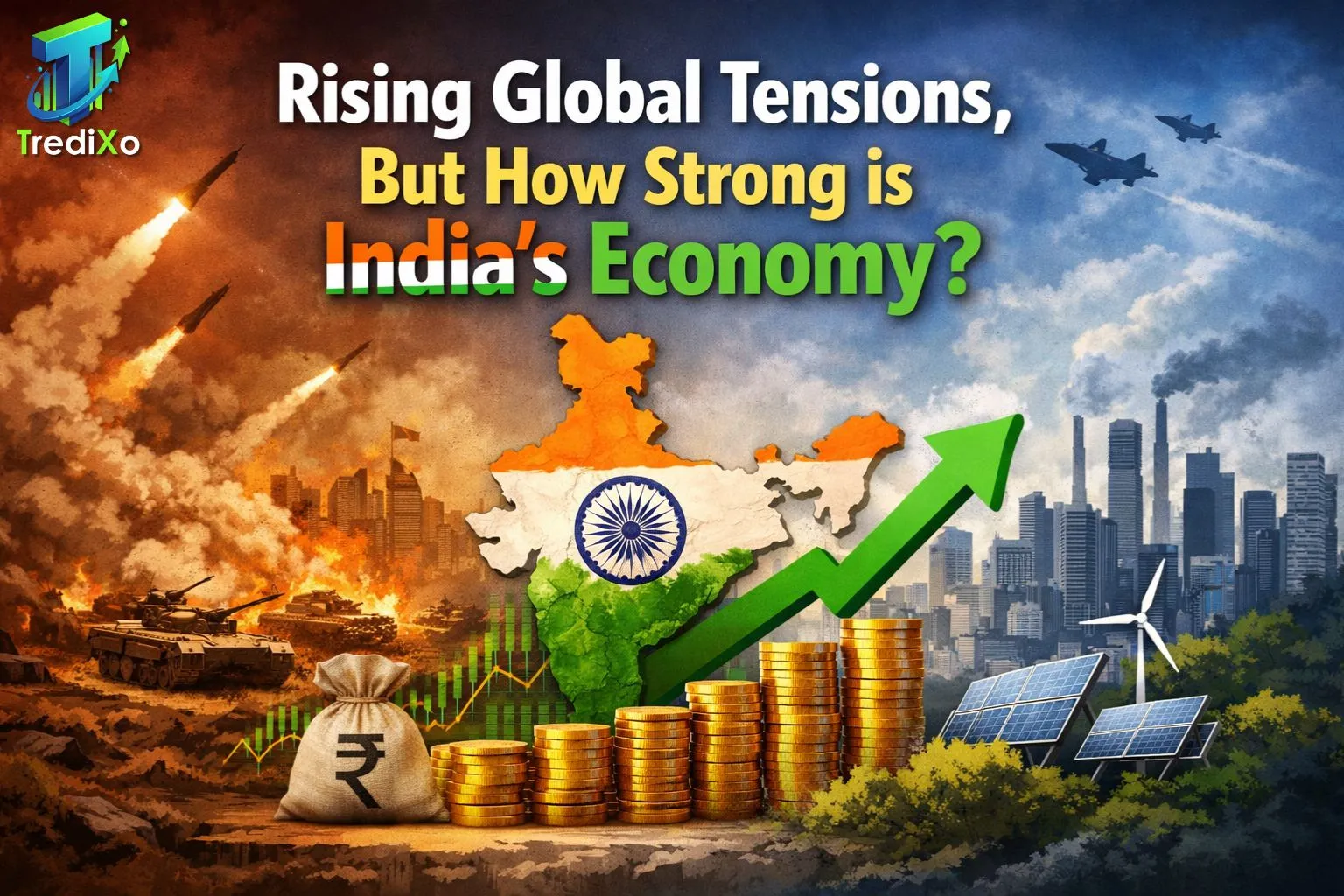
Rising Global Tensions, But How Strong is India’s Economy?
India’s economic story today is a mix of strength and vulnerability. On the surface, growth looks solid — but underneath, global tensions, especially in West Asia, are starting to test how resilient the economy really is.
For a country that imports over 80% of its crude oil, global shocks don’t stay “global” for long. They quickly hit home — through rising fuel prices, costlier imports, and disruptions in trade routes. And when energy prices rise, everything from transport to household budgets starts feeling the pressure.
When Global Crisis Hits Home
As of early 2026, the impact is already visible. The rupee has weakened significantly, oil prices have surged, and the central bank has had to step in to stabilize the situation.
While GDP numbers still look strong, they don’t fully reflect these external risks. Growth figures capture what’s happening inside the country — but not always the pressure building from outside.
Strong Growth, Weak Foundations?
India is currently facing an interesting contradiction.
On one side:
- Economic growth remains strong
- Government spending on infrastructure is high
- Fiscal targets are still on track
But on the other side:
- Foreign investment is flowing out
- Forex reserves are slowly declining
- The currency is under pressure
This creates a gap between headline strength and underlying stress.
The Real Concern: Income vs Spending
Another concern lies in household finances.
Even though consumption drives a major part of India’s economy, real income growth hasn’t kept pace. At the same time:
- Household debt has increased
- Savings have become unstable
- Spending is increasingly supported by credit, not income
This means that if inflation rises — especially due to fuel prices — consumers may pull back quickly, slowing down the entire economy.
Changing Nature of Government Revenue
India’s tax system is also evolving.
More revenue is now coming from transactions (like GST) rather than direct income growth. This works well when the economy is active and spending is high.
But during global disruptions:
- Consumption slows down
- Transactions drop
- Tax collections can take a hit
This makes government finances more sensitive to external shocks than before.
Oil Prices: The Biggest Risk Factor
Oil remains India’s biggest external vulnerability.
A rise in crude prices doesn’t just affect fuel — it impacts:
- Inflation
- Government subsidies
- Trade balance
- Overall economic growth
Even a small increase in oil prices can ripple through the entire economy, increasing costs for both businesses and households.
Impact on Everyday Life
At the ground level, these global shifts are already affecting people.
Higher fuel costs are:
- Increasing daily expenses
- Making transportation costlier
- Pushing up prices of essential goods
At the same time, rising debt and unstable savings mean households have less cushion to absorb these shocks.
The Way Forward
In this changing global environment, India may need to rethink its economic approach.
Some key priorities could include:
- Reducing dependence on imported energy
- Strengthening income growth, not just spending
- Building more stable revenue sources
- Improving financial resilience of households
Final Thought
India’s economy is still strong — but strength today is being tested in new ways.
In a world of rising geopolitical uncertainty, real resilience won’t just come from growth numbers, but from how well the economy can withstand shocks from beyond its borders.