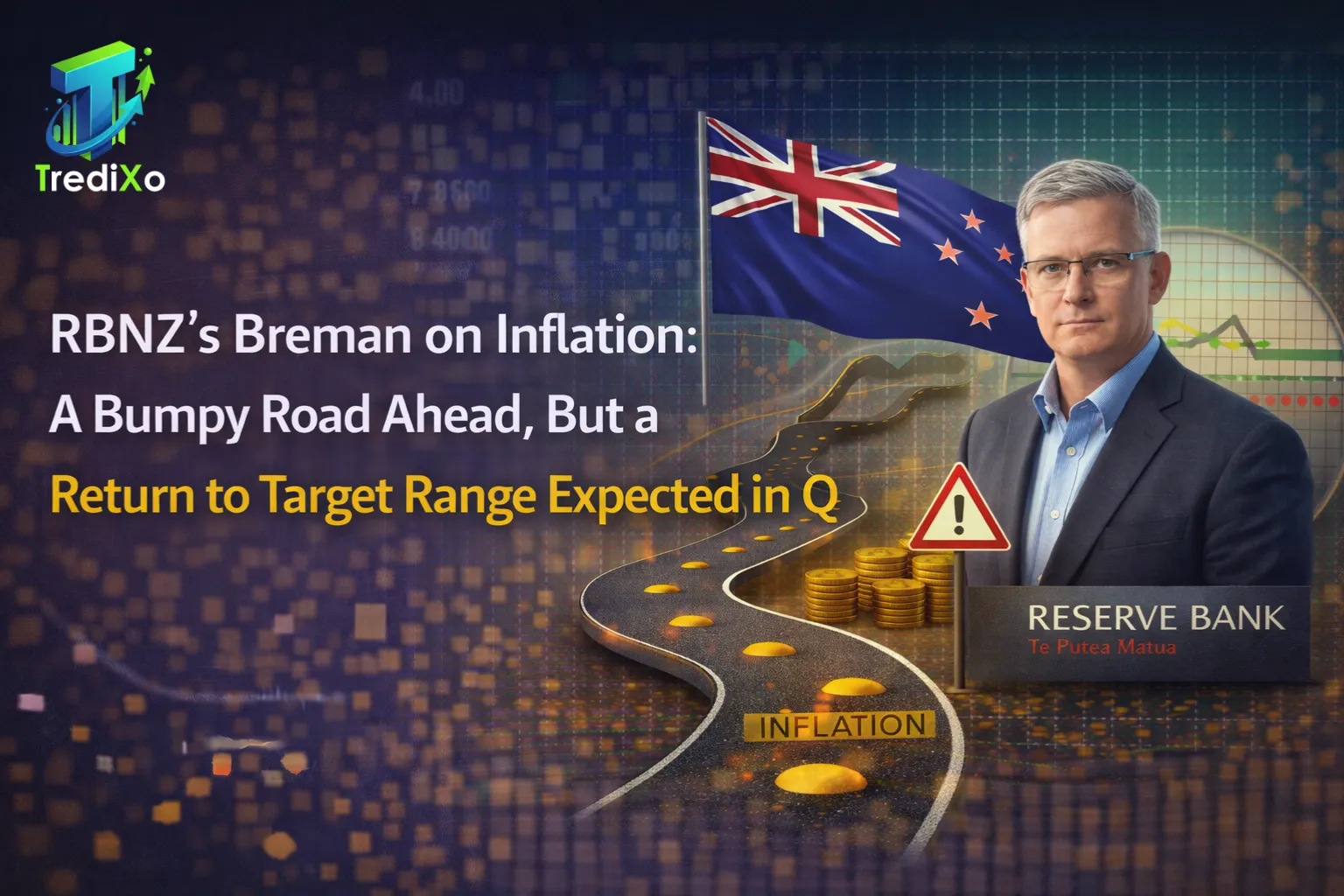
RBNZ's Breman on Inflation: A Bumpy Road Ahead, But a Return to Target Range Expected in Q

New Zealand Inflation Outlook: What the Reserve Bank Policy Means for the Economy
Inflation has become one of the most discussed economic issues across New Zealand. Rising prices for everyday goods, housing, and services have placed pressure on households and businesses alike. As concerns grow, the policy direction of the Reserve Bank of New Zealand (RBNZ) has become a key focus for economists, investors, and consumers.
Recent commentary from RBNZ officials has provided insight into the country’s inflation outlook and how policymakers plan to navigate the economic challenges ahead.
The Current State of Inflation in New Zealand
Inflation in New Zealand has remained higher than the target range set by the Reserve Bank of New Zealand. Consumer prices have increased across several sectors, placing financial strain on households.
Housing costs continue to rise due to strong demand and limited supply in the property market. Both homeowners and renters are experiencing higher living expenses as property prices and rents increase.
Food prices have also climbed noticeably, with groceries and everyday essentials becoming more expensive. These rising costs are affecting family budgets and contributing to ongoing concerns about the country’s cost-of-living pressures.
Potential Impact on the Economy and Consumers
Persistent inflation can create several challenges for the broader economy. As prices increase, the purchasing power of consumers decreases, meaning households may struggle to afford basic necessities such as food, transportation, and energy.
Higher inflation often leads to increased interest rates, as central banks attempt to slow economic activity and reduce price pressures. For consumers, this can result in higher mortgage payments and loan costs.
Businesses are also affected. Rising costs for raw materials and operations may force companies to raise prices, which could further fuel inflation and reduce overall economic growth.
Read Also About : Bull Market vs Bear Market
Actions Taken by the Reserve Bank of New Zealand
To address rising inflation, the Reserve Bank of New Zealand has implemented several monetary policy measures.
One of the key strategies has been raising interest rates to reduce excessive spending and borrowing in the economy. Higher borrowing costs typically slow demand, helping to stabilize price increases over time.
The RBNZ has also emphasized clear communication through forward guidance. By signaling future policy intentions, the central bank aims to manage market expectations and maintain stability in financial markets.
Conclusion
The path toward stabilizing inflation in New Zealand remains challenging. Policymakers at the Reserve Bank of New Zealand must balance economic growth with the need to control rising prices.
As consumers deal with higher living costs, confidence in monetary policy will play a crucial role in shaping economic recovery. Monitoring central bank decisions and economic indicators will be essential in understanding how the country navigates the inflation challenge in the coming months.
All content credit goes to Tredixo.