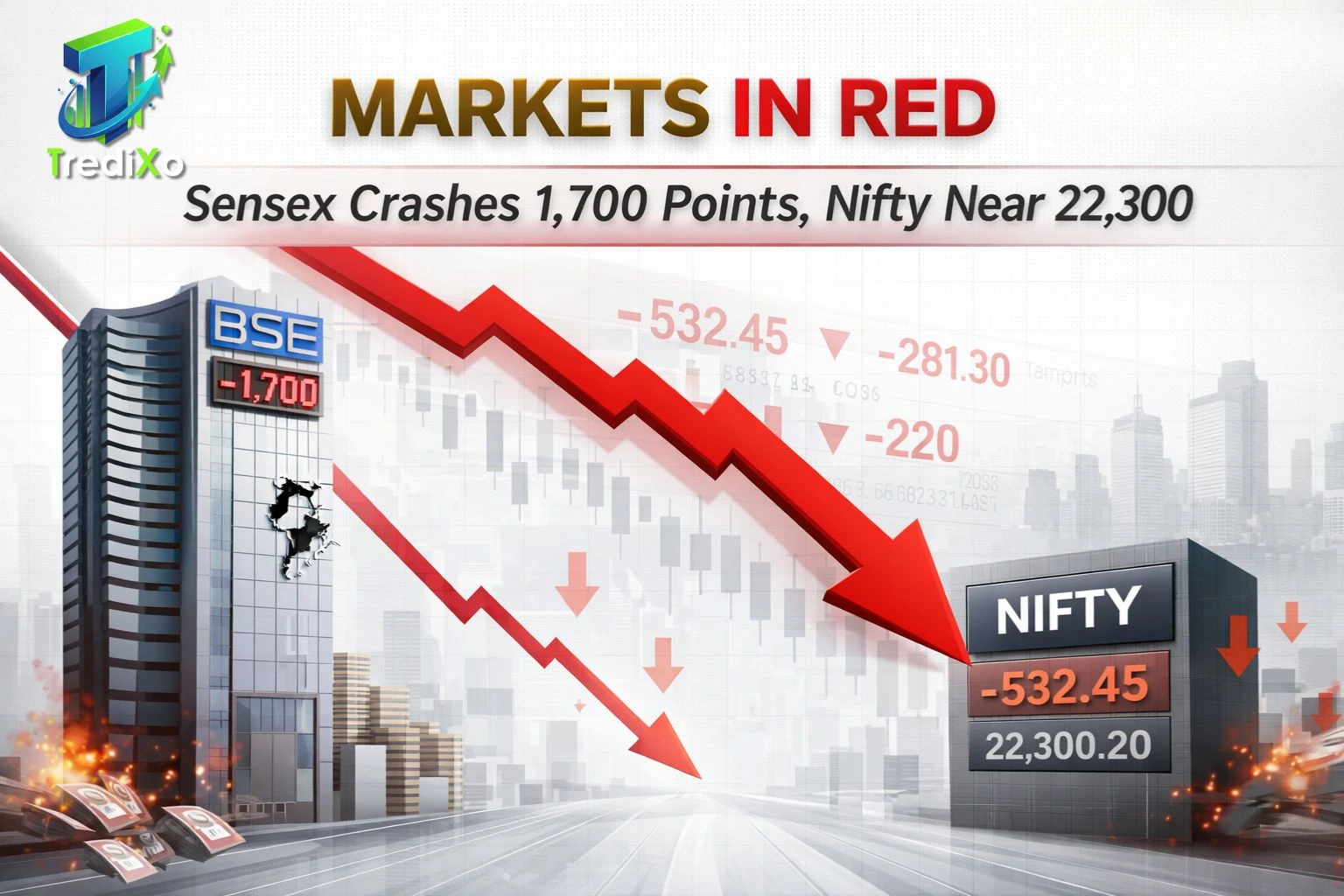
Markets in Red Sensex Crashes 1,700 Points, Nifty Near 22,300
Indian equity markets witnessed heavy selling pressure for the second consecutive session on March 30, as rising global tensions and surging crude oil prices dampened investor sentiment. Benchmark indices Sensex and Nifty 50 closed sharply lower, reflecting a broad-based risk-off mood across sectors.
At around 3 PM, the Sensex plunged 1,719 points (2.34%) to 71,864, while the Nifty dropped 507 points (2.22%) to hover near 22,300. Market breadth remained weak, with a majority of stocks trading in the red, highlighting the intensity of the sell-off.
Key Reasons Behind the Market Fall
1. Crude Oil Surge Sparks Inflation Concerns
Global crude prices continued their sharp rally, with Brent crude crossing $115 per barrel, marking a massive monthly jump. The spike, driven by escalating tensions in the Middle East, has raised concerns about higher inflation, increased import bills, and pressure on India’s fiscal balance.
2. Escalating Geopolitical Tensions
The ongoing conflict in West Asia has entered a critical phase, spreading across regions and raising fears of disruption in key shipping routes. This uncertainty has reduced global risk appetite, pushing investors towards safer assets and away from equities.
3. Banking Stocks Under Pressure
Banking and financial stocks were among the worst hit, falling over 2–2.5%. The decline followed the Reserve Bank of India’s move to tighten foreign exchange exposure limits for banks, which may trigger unwinding of large arbitrage positions and lead to near-term volatility in the sector.
4. Persistent Foreign Investor Selling
Foreign institutional investors (FIIs) continued their selling spree, offloading significant amounts in March. Sustained outflows, combined with global uncertainty and currency pressure, have added to the downside momentum in Indian markets.
Breaking News : Market Shock Bank Nifty Slides 3%, AU SFB & Yes Bank Lead Sell-Off
Worst Month Since 2020?
Both Sensex and Nifty have declined nearly 10.5% in March, putting them on track for their worst monthly performance since the pandemic-led crash in 2020. Rising crude prices, geopolitical risks, and record foreign outflows have collectively weakened investor confidence.
Sectoral Impact
The impact of rising oil prices is expected to be widespread. Sectors like oil marketing companies, airlines, cement, paints, and logistics may face earnings pressure if crude prices remain elevated. Analysts estimate that prolonged disruptions could lead to a noticeable hit to corporate earnings and economic growth.
Volatility on the Rise
With monthly derivatives expiry and heightened global uncertainty, volatility spiked sharply. Market volatility index (VIX) surged, indicating nervousness among investors and the possibility of continued sharp swings in the near term.
What Should Investors Do?
Experts advise a cautious and selective approach in the current environment. Instead of chasing short-term rebounds, investors should focus on accumulating fundamentally strong stocks during dips. A sustained recovery may only begin once the Nifty stabilizes above key resistance levels.
Content Credit Goes To: Tredixo