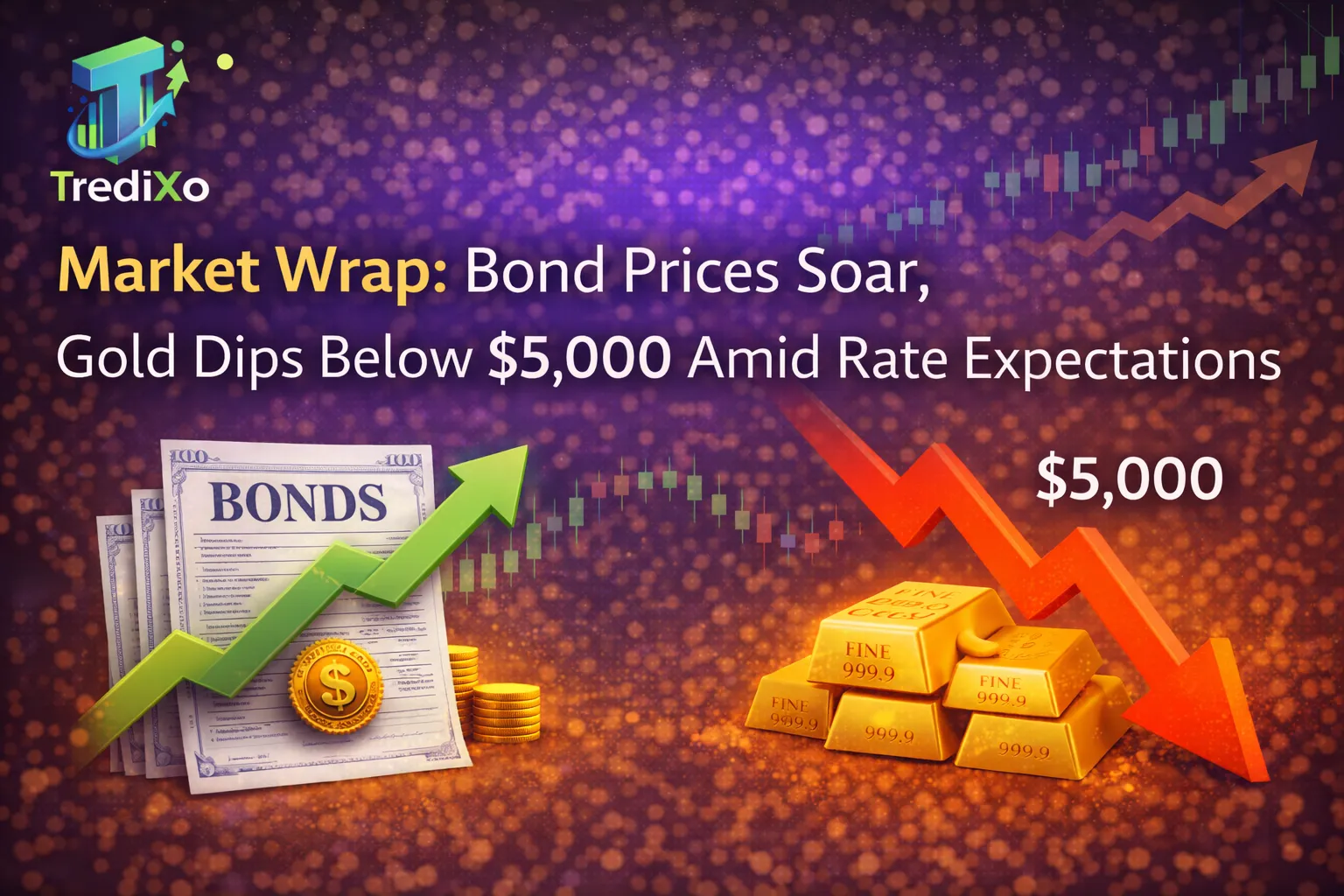
Market Wrap: Bond Prices Soar, Gold Dips Below $5,000 Amid Rate Expectations
Introduction to the current market situation
The financial markets are buzzing with activity as bond prices surge to unexpected heights, while gold has dipped below the $5,000 mark. This intriguing shift comes amidst rising interest rate expectations that have left investors scrambling to make sense of it all. With a global bond market rally in full swing, many are wondering what these changes mean for their portfolios and future investments. As we delve into the current market landscape, we'll explore the driving forces behind these trends and offer insights that could help you navigate this volatile environment effectively. Welcome to your market wrap-up—let’s dive in!
Why are bond prices soaring and what does it mean?
Bond prices are soaring primarily due to a flight to safety among investors. As economic uncertainties loom, many seek the stability that bonds offer. When stocks become volatile, capital often shifts toward fixed-income securities.
Central banks worldwide play a crucial role in this rally. Their monetary policies and hints at lower rates have made bonds more attractive. The expectation of prolonged low interest rates means existing bonds with higher yields gain value.
Additionally, inflation concerns drive demand for government debt as a hedge against rising prices. Investors are locking in returns before potential rate hikes occur later on.
This surge signals confidence in the bond market but also reflects caution regarding stock performance. As bond prices rise, it suggests that traders may be anticipating slower growth or even recessionary conditions ahead.
The impact of interest rate expectations on the stock market
Interest rate expectations play a pivotal role in shaping stock market dynamics. When rates are anticipated to rise, investors often pull back from equities. Higher borrowing costs can squeeze corporate profits and dampen consumer spending.
Conversely, when the outlook is for lower rates, stocks generally gain appeal. Cheaper loans mean businesses can invest more freely, fueling growth prospects and boosting share prices.
Market sentiment also shifts based on these expectations. Traders adjust their strategies quickly; bullish trends may shift to caution as they gauge how interest rates will influence economic stability.
The correlation between rate changes and equity valuations is complex but significant. Investors must remain vigilant as fluctuations in interest rate forecasts ripple through various sectors of the stock market, creating both opportunities and risks along the way.
How gold is affected by these market conditions
Gold has always been seen as a safe haven during economic turbulence. However, recent market dynamics have placed downward pressure on its value.
As bond prices surge, investors tend to favor fixed-income assets over commodities like gold. The rising yields make bonds more attractive, pulling capital away from precious metals.
Additionally, interest rate expectations play a crucial role in shaping gold's trajectory. When rates rise or are anticipated to increase, the opportunity cost of holding non-yielding assets like gold also rises. This leads to decreased demand among investors seeking better returns elsewhere.
Market sentiment shifts further when inflation fears ease. In such contexts, gold loses its luster as an inflation hedge and can experience significant price declines.
The interplay between these factors creates a complex landscape for traders focused on the yellow metal amid current fluctuations in the global financial arena.
Expert predictions for future market trends
Analysts are closely watching the bond market as prices surge. Expectations of slower interest rate hikes may lead to a continued rally in global bonds.
Many experts predict that if central banks maintain a cautious approach, we could see sustained demand for long-term government bonds. This shift might attract more conservative investors seeking stability.
On the other hand, stock markets could face pressure. If inflation remains persistent yet manageable, equities may struggle with volatility as traders reassess their risk appetite.
Gold’s decline below $5,000 raises questions about its role as a safe haven. Some analysts suggest it might recover if economic uncertainty intensifies or geopolitical tensions escalate.
Market sentiment is increasingly influenced by macroeconomic indicators and policy decisions from central banks worldwide. Staying updated on these trends will be crucial for investors navigating this complex landscape.
Tips for investors during times of volatility
Staying calm is key during market fluctuations. Panic selling rarely leads to good decisions. Instead, take a step back and assess your portfolio.
Diversification can be your best friend in turbulent times. Spread investments across sectors, asset classes, and geographies to reduce risk.
Keep an eye on cash reserves as well. Having liquidity allows you to seize opportunities when prices dip unexpectedly.
Consider setting stop-loss orders for added protection against significant downturns. This strategy helps limit losses without constant monitoring.
Research is crucial now more than ever. Understand the fundamentals of the bonds and stocks you're interested in before making any moves.
Don’t hesitate to consult with financial advisors who understand current market dynamics well. Their insights can provide valuable perspectives that might enhance your strategies amidst volatility.
Conclusion and recommendations for navigating the current market climate
Navigating the current market climate requires a strategic approach. With bond prices surging, it's essential to assess your portfolio's exposure to fixed-income investments. Diversification can alleviate risks associated with market volatility.
Investors should remain cautious about gold, especially as it dips below $5,000. Monitoring global demand and geopolitical factors will be key in making informed decisions regarding precious metals.
Keeping an eye on interest rate expectations is crucial too. As central banks navigate inflationary pressures, adjusting your investment strategy may prove beneficial.
Consider short-term opportunities while maintaining a long-term perspective. Flexibility in investment choices allows for better adaptation to sudden changes in the market landscape.
Staying informed through reliable financial news sources can empower decision-making during uncertain times. Engaging with professional advisors also ensures that you’re equipped with expert insights tailored to your unique financial situation.
FAQ
Navigating the current market climate requires an understanding of complex factors at play. As bond prices surge, many investors are left wondering how best to position their portfolios. With interest rate expectations looming large, volatility may become a recurring theme.
Investors need to remain vigilant and informed. Keeping a close eye on economic indicators and central bank announcements can provide valuable insights into future trends. Diversification across various asset classes is essential in times of uncertainty.
To address some common questions:
What factors are driving the surge in bond prices?
The increase in demand for bonds often correlates with shifts in monetary policy and investor sentiment during uncertain times.
How does falling gold prices impact investment strategies?
A decline below $5,000 may lead some investors to reassess their positions if they view gold as a safe haven against inflation or currency fluctuations.
What role do interest rate expectations play?
Higher rates typically mean lower bond prices; however, when investors anticipate that rates will stabilize or decrease, it can result in a rally within the global bond market.
Should investors be worried about these changes?
While there’s always risk involved, being well-informed allows for better decision-making tailored to individual financial goals.
Are there specific sectors that tend to perform better during such volatility?
Defensive stocks or those related to consumer staples usually hold up well when markets fluctuate widely due to their steady demand regardless of economic conditions. All the credit goes to Tredixo