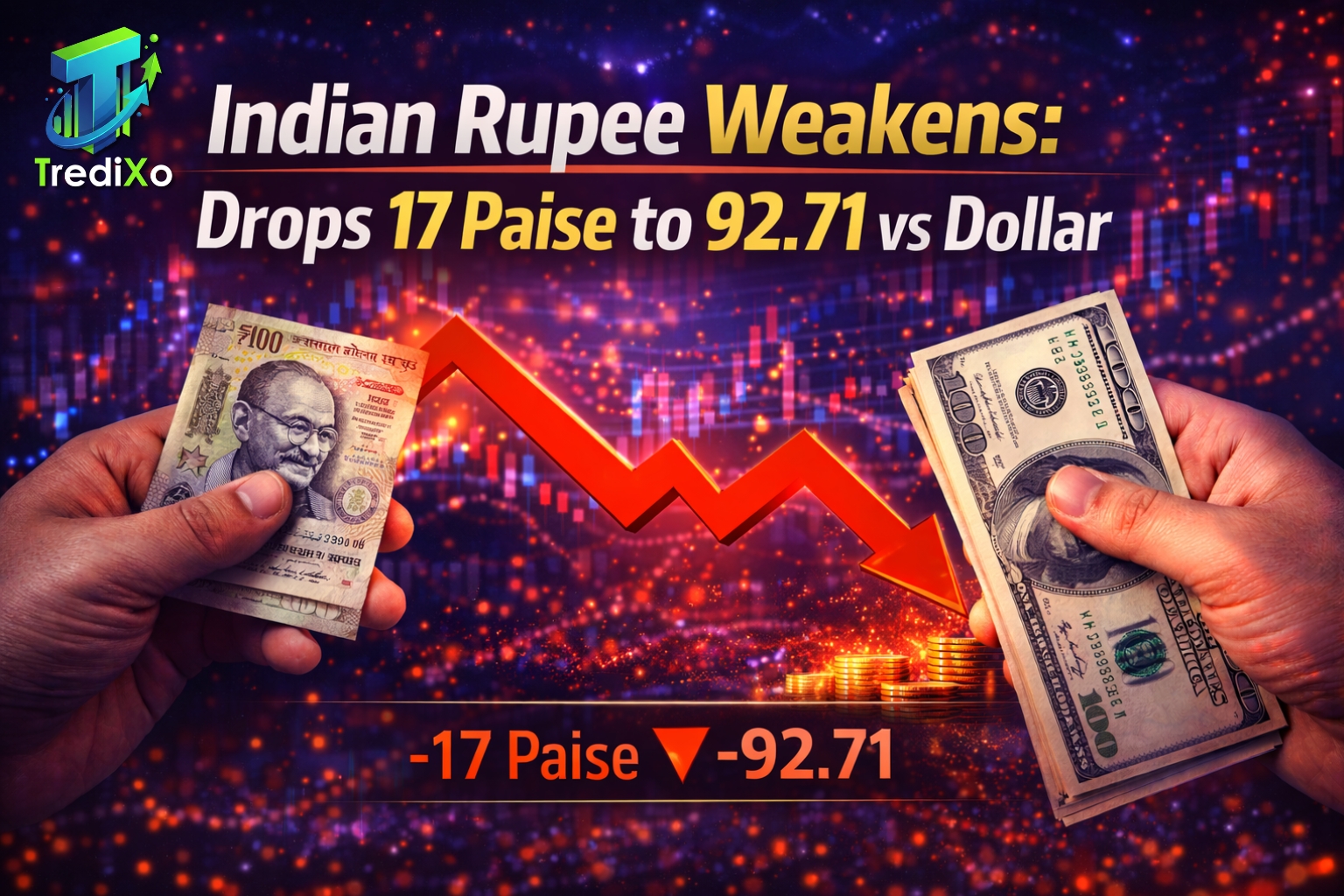
Indian Rupee Weakens: Drops 17 Paise to 92.71 vs Dollar
The Indian currency witnessed fresh pressure in today’s trading session as the rupee slipped by 17 paise to close at 92.71 against the US dollar. The decline reflects growing global uncertainty, rising demand for the dollar, and cautious sentiment among investors.
Let’s break down what’s really happening behind this move and what it could mean for businesses, traders, and everyday consumers.
Why is the Rupee Falling?
The rupee’s fall didn’t happen in isolation. It is part of a broader global trend where emerging market currencies are under pressure.
One of the biggest reasons is the strength of the US dollar. As investors look for safer assets amid geopolitical tensions and economic uncertainty, they often move their money into the dollar. This increased demand pushes the dollar higher and weakens currencies like the rupee.
Another contributing factor is the rise in crude oil prices. Since India imports a large portion of its oil, a stronger dollar makes imports more expensive. This puts additional pressure on the rupee.
Global Factors Driving the Decline
Global cues played a significant role in today’s rupee movement:
- Rising US bond yields made dollar assets more attractive
- Ongoing geopolitical tensions increased risk aversion
- Foreign investors showed cautious behavior in Indian equities
When foreign institutional investors (FIIs) pull money out of Indian markets, it creates demand for dollars, leading to rupee depreciation.
Impact on Indian Markets
The weakening rupee has a mixed impact on the Indian economy.
On one hand, export-oriented sectors like IT and pharmaceuticals may benefit because their earnings in dollars become more valuable when converted into rupees.
On the other hand, import-heavy industries such as oil, electronics, and automobiles may face higher costs, which could eventually impact consumers.
Stock markets also reacted cautiously today, reflecting investor uncertainty amid global developments.
What Should Traders and Investors Do?
In times like these, staying informed and making calculated decisions becomes crucial.
Platforms like Tredixo are increasingly becoming useful for traders who want real-time insights, market trends, and smarter trading strategies. With currency volatility on the rise, having access to reliable data and analysis can make a big difference.
Experts suggest that traders should:
- Avoid panic-driven decisions
- Keep an eye on global cues
- Diversify their portfolios
- Use analytics tools to track trends
What Lies Ahead?
Looking forward, the rupee’s movement will largely depend on:
- US Federal Reserve policies
- Crude oil price trends
- Global geopolitical developments
- Foreign investment flows
If global uncertainty continues, the rupee may remain under pressure in the near term. However, strong domestic fundamentals could provide some support.
Final Thoughts
Today’s 17 Paise drop to 92.71 against the dollar highlights the fragile balance of global and domestic factors influencing the Indian currency. While short-term volatility may continue, informed decision-making remains the key.
For traders, investors, and businesses alike, keeping a close watch on the market and leveraging platforms like Tredixo can help navigate these uncertain times more effectively.
Content Credit Goes To : Tredixo