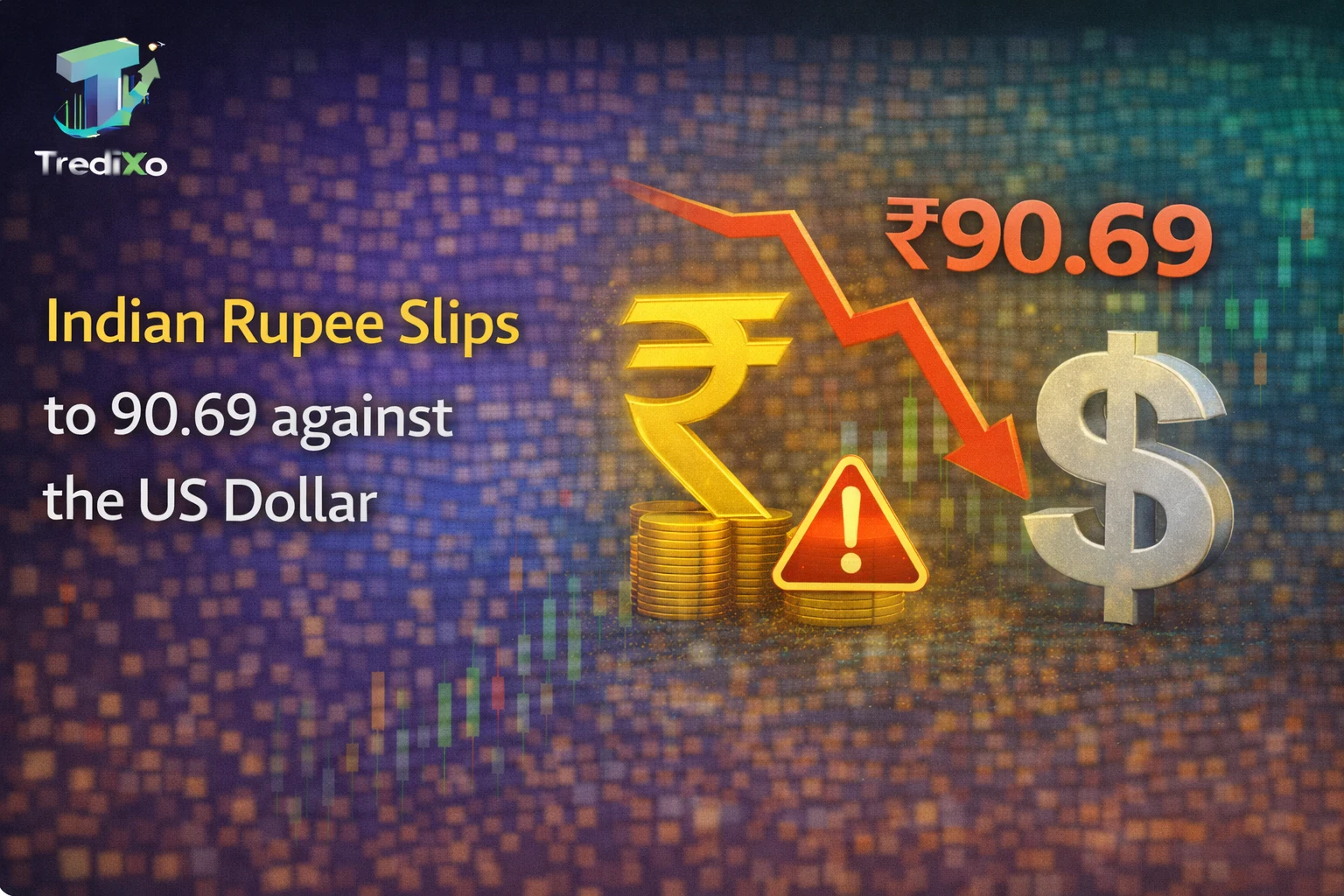
Indian Rupee Slips to 90.69 against the US Dollar

How much is $1 US in India today? The Indian Rupee weakened to 90.69 against the US Dollar, reflecting persistent pressure from global and domestic factors. Currency markets remained volatile as investors assessed strong dollar demand, fluctuating crude oil prices, and cautious risk sentiment across emerging markets.
Why Did the Indian Rupee Fall to 90.69?
Several interconnected factors contributed to the rupee’s decline:
- Strong US Dollar: Expectations of prolonged higher interest rates in the US boosted demand for the dollar, putting pressure on emerging market currencies.
- Rising Crude Oil Prices: India’s heavy reliance on oil imports increases dollar demand when crude prices rise, weighing on the rupee.
- Foreign Fund Outflows: Portfolio investors turned cautious amid global uncertainty, leading to capital outflows from Indian equities and debt.
- Trade Deficit Concerns: A widening trade deficit elevates demand for foreign currency, weakening the domestic unit.
- Risk-Off Sentiment: Geopolitical tensions and global growth worries prompted investors to seek safe-haven assets like the dollar.
Market Impact

- Imports Become Costlier: A weaker rupee raises import bills, especially for oil, electronics, and fertilizers.
- Exporters Benefit Marginally: Export-oriented sectors may gain competitiveness, though global demand conditions remain key.
- Inflation Watch: Sustained currency weakness can feed into imported inflation, influencing monetary policy decisions.
- Equity Market Volatility: Currency swings often translate into short-term volatility in stock markets.
Role of the Central Bank
The Reserve Bank of India typically monitors sharp currency movements and may intervene to smooth excessive volatility. While the RBI does not target a specific exchange rate, it aims to ensure orderly market conditions and financial stability.
Conclusion
Will INR get stronger in 2025? The Indian rupee’s slip to 90.69 against the US dollar underscores the challenges posed by global dollar strength, higher crude prices, and cautious investor sentiment. While short-term volatility may persist, medium-term rupee stability will depend on capital flows, inflation trends, growth prospects, and global monetary policy cues. Market participants will closely track macro data and central bank signals for direction.
FAQs
Q1. Why is the Indian rupee weakening against the US dollar?
A: The rupee is under pressure due to a strong US dollar, higher crude oil prices, foreign fund outflows, and global risk aversion.
Q2. Does a weaker rupee affect inflation in India?
A: Yes. A depreciating rupee can make imports costlier, potentially leading to imported inflation over time.
Q3. Who benefits from a weaker rupee?
A: Exporters may benefit as their goods become more competitive overseas, though gains depend on global demand.
Q4. Will the RBI intervene to support the rupee?
A: The RBI may intervene to curb excessive volatility, but it generally allows the market to determine the exchange rate.
Q5. What should investors watch going forward?
A: Key triggers include US interest rate expectations, crude oil prices, foreign investment flows, and India’s macroeconomic data.
All credit goes to Tredixo .