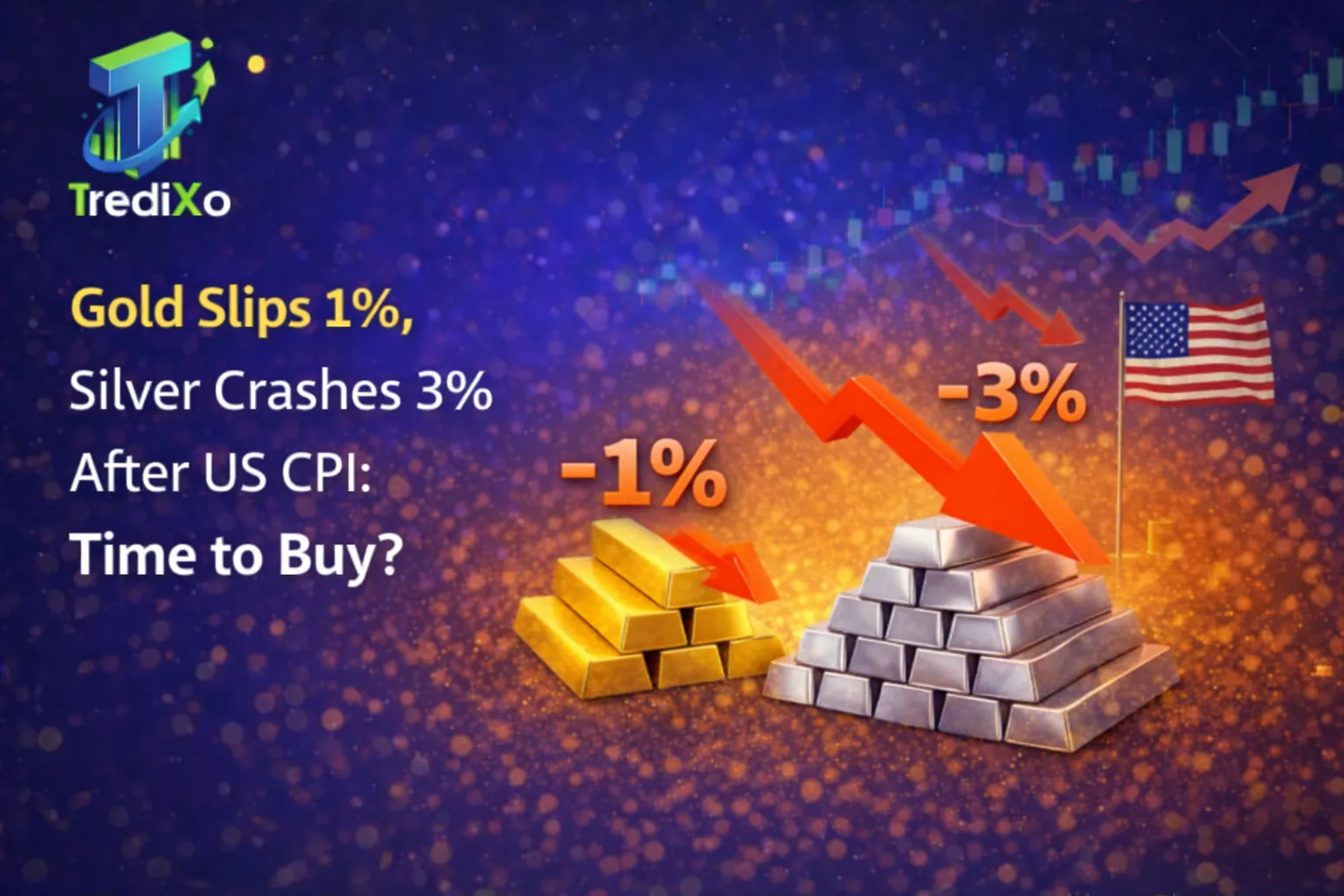
Gold Slips 1%, Silver Crashes 3% After US CPI: Time to Buy?

The precious metals market experienced a sudden pullback after the latest inflation report from the United States. Following the release of the US Consumer Price Index data, both Gold and Silver came under strong selling pressure. Gold declined roughly 1%, while silver dropped nearly 3%, triggering debate among investors about whether this dip presents a buying opportunity or signals more downside ahead.
The reaction highlights how sensitive precious metals are to macroeconomic data and interest rate expectations.
Gold Prices Decline After Inflation Data
Gold prices weakened after the release of the latest US inflation numbers. The US Consumer Price Index plays a critical role in shaping expectations about interest rates and monetary policy.
When inflation data suggests that interest rates may remain high for longer, gold often faces downward pressure. Since gold does not generate yield, higher interest rates make interest-bearing assets such as bonds more attractive to investors.
Another factor behind the decline was profit-taking. After a recent rally, many traders chose to lock in gains, which added to selling pressure in both the spot and futures markets.
Today Breaking News: RBNZ's Next Interest Rate Move
Silver Experiences a Sharper Correction
While gold slipped modestly, Silver experienced a steeper fall. Silver is typically more volatile because it has a dual role in the market.
On one hand, it acts as a safe-haven asset similar to Gold. On the other, it is widely used in industrial sectors such as electronics, solar panels, and manufacturing.
After the CPI release, concerns about economic growth and industrial demand contributed to the sharp drop in silver prices. The decline also triggered stop-loss orders, accelerating short-term selling in the futures market.
Why CPI Data Affects Precious Metals
Inflation data from the US Consumer Price Index is one of the most important economic indicators for the precious metals market.
Higher inflation can sometimes support gold and silver because investors view them as hedges against rising prices. However, if inflation leads to expectations of tighter monetary policy or higher interest rates, precious metals may decline.
The market reaction therefore depends not only on inflation itself but also on how it changes expectations for future central bank decisions and bond yields.
Is This a Buying Opportunity?
Whether the current dip presents a buying opportunity largely depends on an investor’s strategy and time horizon.
Long-term investors often use price corrections to gradually accumulate gold and silver, especially if they believe inflation risks, geopolitical tensions, or currency instability will continue.
Short-term traders, however, may prefer to wait for clearer signals such as price stabilization, technical support levels, or shifts in monetary policy expectations before entering new positions.
For now, analysts expect both metals to remain volatile as markets continue reacting to economic data and central bank guidance.
Conclusion
The recent drop in Gold and Silver following the release of the US Consumer Price Index highlights how quickly market sentiment can change.
While gold fell about 1% and silver nearly 3%, such corrections are common in commodity markets. Investors should closely monitor interest rate expectations, economic indicators, and support levels before making new investment decisions.
Despite short-term volatility, precious metals continue to play an important role as diversification assets and long-term stores of value.
FAQ
Why did gold prices fall after the CPI data release?
Gold declined mainly due to profit-taking and concerns that inflation data could delay interest rate cuts, reducing demand for non-yielding assets.
Why did silver drop more than gold?
Silver is more volatile because it is influenced by both safe-haven demand and industrial demand expectations.
Is this a good time to buy gold and silver?
Long-term investors may consider gradual accumulation, while short-term traders often wait for price stability.
How does CPI affect gold and silver prices?
CPI data influences interest rate expectations and bond yields, which directly impact the attractiveness of precious metals.
Do gold and silver still act as safe-haven assets?
Yes, but their prices can fluctuate significantly in the short term due to macroeconomic data and market sentiment.
All Credit Goes To : Tredixo