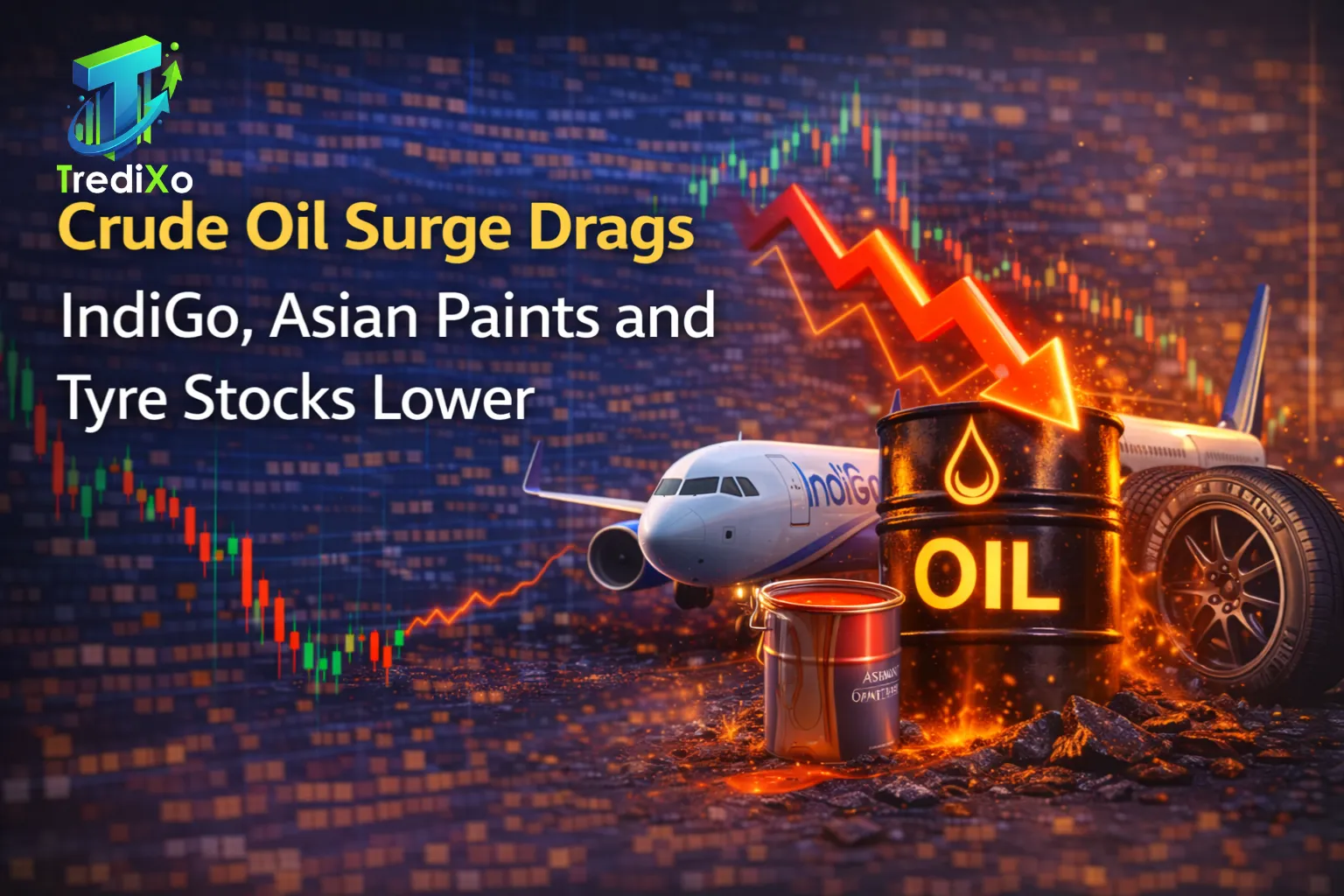
Crude Oil Surge Drags IndiGo, Asian Paints and Tyre Stocks Lower

The recent surge in crude oil prices has begun to weigh heavily on several sectors of the Indian stock market. Companies that depend significantly on fuel or petroleum-based raw materials are experiencing increased cost pressures, leading to declines in their share prices. Stocks such as IndiGo, Asian Paints, and several leading tyre manufacturers have come under pressure as investors grow concerned about rising operational expenses and the potential impact on profit margins.
Crude oil is one of the most influential global commodities, and fluctuations in its price often ripple across multiple industries. When oil prices rise sharply, companies that rely on fuel or petrochemical derivatives usually face higher input costs. This often reduces profitability and can trigger negative sentiment among investors, resulting in a sell-off in related stocks.
Aviation Sector Faces Immediate Impact
Airline companies are among the most vulnerable to rising crude oil prices. For airlines like IndiGo, aviation turbine fuel (ATF) represents a substantial portion of operating expenses. Even a moderate increase in crude oil prices can significantly affect airline profitability.
When fuel costs rise, airlines may attempt to increase ticket prices. However, intense competition and price-sensitive customers often limit their ability to fully pass these costs onto passengers. As a result, operating margins shrink, and airline stocks tend to react negatively in the stock market.
Read Also: USD/JPY and AUD/JPY in Focus as Japan Election Approaches
Paint Companies Under Raw Material Cost Pressure
Paint manufacturers such as Asian Paints are also affected by rising crude prices because many of their raw materials are petroleum derivatives. Key ingredients used in paint production—including solvents, resins, and other petrochemical components—are directly linked to crude oil prices.
As crude prices climb, manufacturing costs increase. Companies must then decide whether to absorb the additional cost, which reduces profit margins, or raise product prices, which may impact consumer demand. This delicate balance often creates uncertainty for investors.
Tyre Industry Also Feels the Heat
The tyre industry is another sector that experiences cost pressures when crude oil prices rise. Many raw materials used in tyre manufacturing, including synthetic rubber and other petrochemical compounds, are derived from crude oil.
When input costs increase, tyre manufacturers face higher production expenses. While companies may eventually pass some of these costs on to consumers, there is usually a delay before price adjustments take effect. During this period, profit margins can decline, which often impacts investor confidence and stock performance.
Global Factors Driving Oil Prices Higher
Several global developments can contribute to rising crude oil prices. Geopolitical tensions, supply disruptions, and production decisions by major oil-producing countries often create volatility in energy markets.
When oil supply becomes uncertain or global demand rises, crude prices tend to increase. Such conditions usually trigger negative reactions in stock market sectors that rely heavily on fuel and petrochemical inputs.
Conclusion
The recent spike in crude oil prices has created short-term challenges for industries such as aviation, paints, and tyre manufacturing. Stocks like IndiGo, Asian Paints, and leading tyre companies have declined as investors factor in the impact of rising fuel and raw material costs.
Going forward, the performance of these sectors will largely depend on the direction of crude oil prices and how effectively companies manage increasing input costs. Investors will closely monitor global oil market trends as well as corporate strategies aimed at protecting profit margins.
All content credit goes to Tredixo.