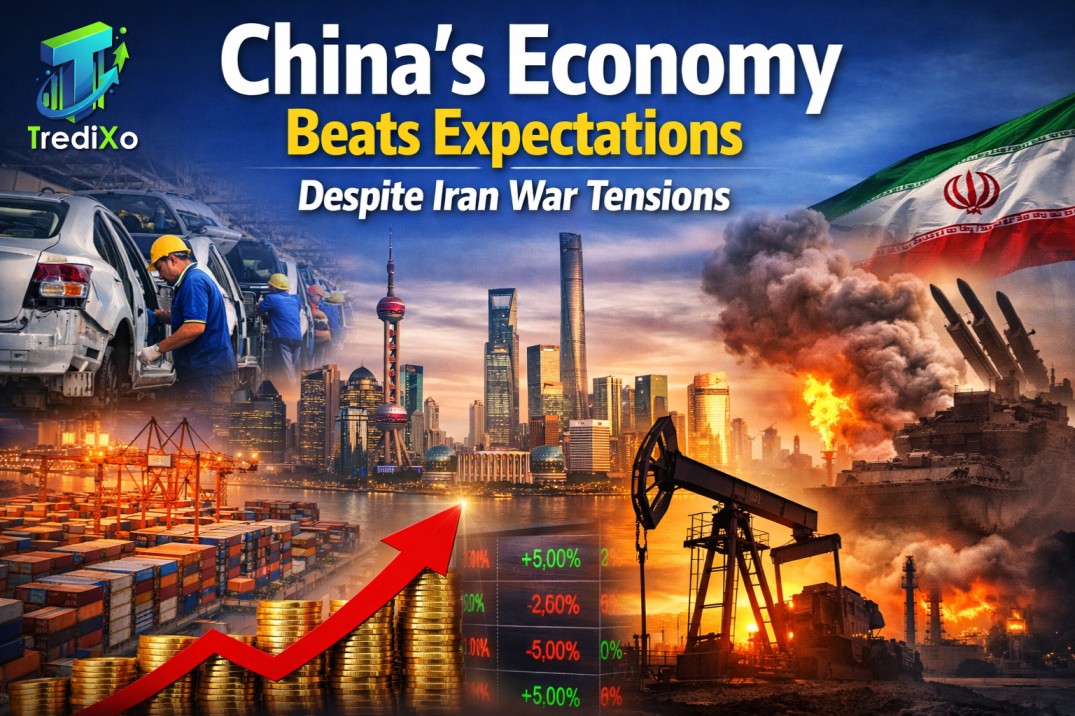
China’s Economy Beats Expectations Despite Iran War Tensions
China’s economy delivered a stronger-than-expected performance in the first quarter of the year, even as global markets grapple with the ripple effects of the ongoing Iran conflict involving the US and Israel.
According to official figures, China’s gross domestic product (GDP) grew by 5% year-on-year, beating economists’ expectations of around 4.8%. This comes as a positive signal for the world’s second-largest economy, which has been facing both domestic and international challenges.
Growth Comes Amid Global Disruptions
The economic growth is particularly notable given the geopolitical tensions in the Middle East. The conflict, which began on 28 February, has significantly disrupted global energy supplies, with Asian economies feeling the pressure the most.
Rising oil prices and supply uncertainties have affected industries worldwide, yet China has managed to maintain steady momentum—at least for now.
Manufacturing Leads the Recovery
A key driver behind this stronger growth has been China’s manufacturing sector. After a relatively slower expansion of 4.5% in the previous quarter, the recent rebound highlights renewed industrial activity.
Exports, especially in automobiles and manufactured goods, have been a major bright spot. Analysts, including experts from the Brookings Institution, point out that global demand for Chinese products has helped cushion the economy against external shocks.
However, not all sectors are performing equally well. China’s ongoing property crisis continues to drag on growth, with declining real estate investments weighing heavily on the economy.
Uncertainty Ahead Due to Iran Conflict
While the current numbers look encouraging, experts warn that the full impact of the Iran conflict is yet to be reflected in the data.
Trade disruptions, rising fuel costs, and global uncertainty are expected to slow growth in the coming months. Economists predict that the next quarter could show weaker performance as these pressures intensify.
Lower Growth Target Signals Caution
This GDP data also marks the first release since Beijing lowered its annual growth target to 4.5%–5%, the most modest goal since 1991.
The revised target reflects a more cautious outlook as the government navigates multiple economic challenges, including:
- Weak consumer spending
- A shrinking population
- Ongoing struggles in the property sector
To counter these issues, China is focusing on long-term strategies such as investing in innovation, high-tech industries, and boosting domestic consumption under its latest Five-Year Plan.
Trade Pressures and Global Politics
China is also facing pressure from international trade dynamics. Ongoing tensions with the United States remain a concern, especially regarding tariffs.
Currently, Chinese goods face a 10% US tariff, but there are signals that these could increase again in the coming months. Meanwhile, a potential meeting between US President Donald Trump and Chinese President Xi Jinping in May is being closely watched for any signs of easing tensions.
Exports Slow, Imports Surge
Recent trade data paints a mixed picture. China’s export growth slowed sharply to 2.5% in March, marking a six-month low. This slowdown reflects weaker global demand, rising inflation, and reduced consumer spending worldwide.
Interestingly, imports surged by nearly 28%, largely due to rising global costs—especially energy prices driven by the conflict.
As a result, China’s trade surplus dropped to just over $50 billion, its lowest level in more than a year.
Rising Energy Costs Add Pressure
The Iran conflict has had a direct impact on global energy markets. Threats to shipping routes like the Strait of Hormuz have pushed oil prices higher, affecting everything from fuel to plastic production.
Although China is less dependent on Gulf oil compared to countries like Japan and South Korea, it is still feeling the effects:
- Petrol prices are rising
- Airlines are cutting flights due to expensive jet fuel
- Production costs are increasing across industries
The Road Ahead
China’s latest economic data shows resilience in the face of global uncertainty. However, challenges remain on multiple fronts—from geopolitical tensions to domestic structural issues.
While the current growth figures offer optimism, the coming months will be crucial in determining whether China can sustain this momentum or face a slowdown as global pressures mount.
Content Credit Goes To : Tredixo