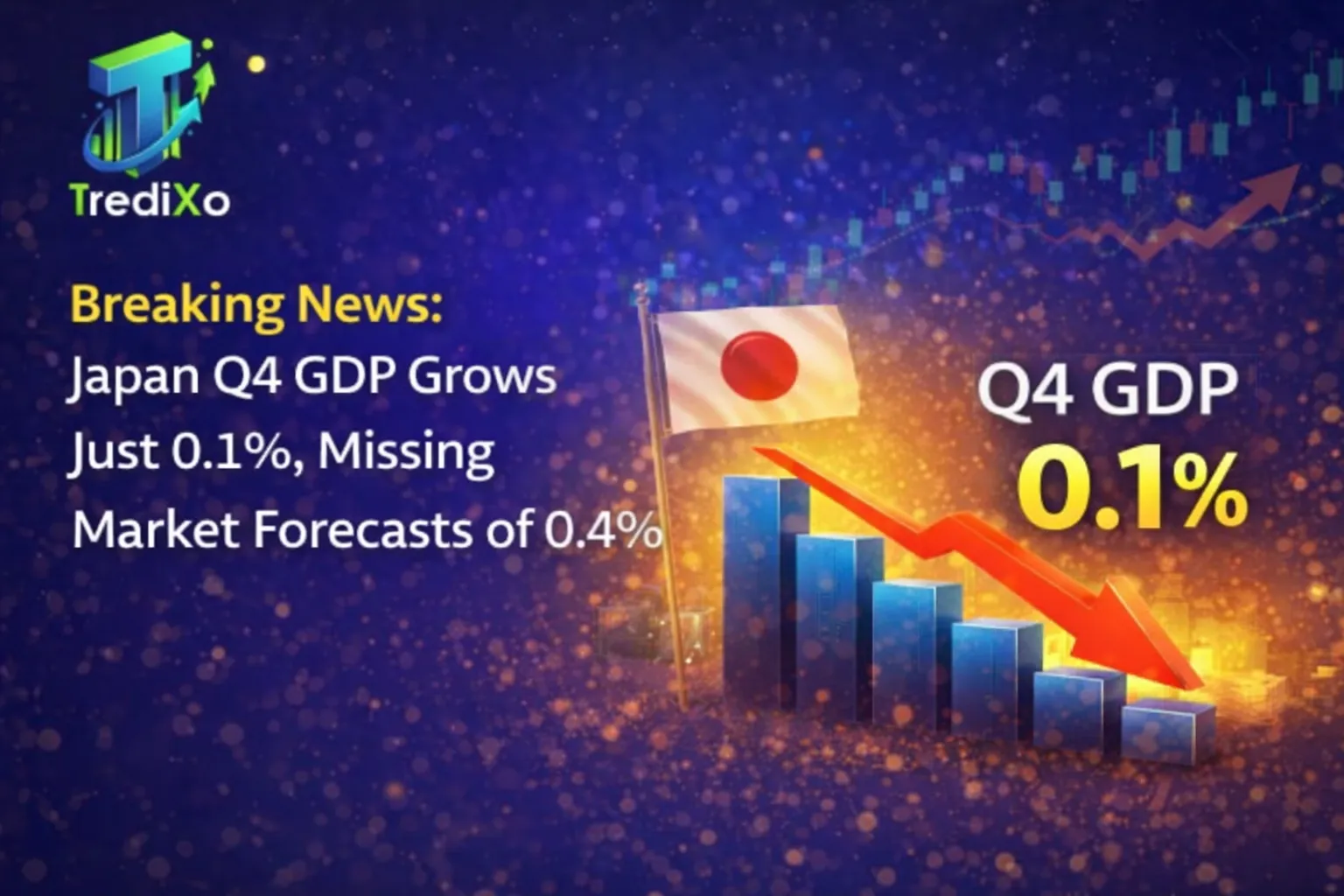
Breaking news: Japan Q4 GDP Grows Just 0.1%, Missing Market Forecasts of 0.4%

Japan's economic landscape has just taken an unexpected turn. Japan Q4 GDP growth rate came in at a mere 0.1%, significantly missing market forecasts of 0.4%. This news sends ripples through not only the Japanese economy but also global markets, raising questions about future trends and Bank of Japan policies. As investors digest this data, the impact on yen and markets becomes increasingly critical to monitor. What does this mean for exporters? How will consumer spending react?
Japan's Q4 GDP growth rate and expectations
Japan's Q4 GDP growth rate has emerged as a point of concern. The reported 0.1% growth falls short of the anticipated 0.4%. This discrepancy catches many analysts off guard, amplifying worries about Japan's economic resilience.
Market expectations had leaned towards stronger performance, fueled by hopes for recovery in consumer spending and exports. However, the reality paints a different picture—one marked by stagnation rather than robust expansion.
Impact on Japanese economy and global markets
The disappointing Q4 GDP growth of just 0.1% raises concerns about Japan's economic stability. In forex market this figure not only misses the expected 0.4%, but also signals potential weaknesses in domestic consumption and exports.
Investors globally will be watching closely, as weak Japanese economic performance can ripple through international markets. The yen’s reaction to this data could lead to increased volatility against major currencies, impacting trade dynamics further.

Possible reasons for the missed forecasts
Japan's economy faced several headwinds in Q4 that contributed to the disappointing GDP growth rate. A notable factor was the persistent weakness in exports. Global demand has shifted, and Japan’s major trading partners have reported slower economic activity.
Additionally, domestic consumption remained lackluster. Rising inflation squeezed household budgets, leading consumers to cut back on spending. This drop in consumer confidence didn't align with previous optimistic forecasts.
Conclusion
Japan's latest GDP growth figures have left economists and investors on edge. The unexpected 0.1% increase is a stark contrast to the anticipated 0.4%, raising questions about the nation's economic resilience.
As we analyze these developments, it's clear that various factors are at play. Weakness in exports and consumption highlights underlying challenges that may be affecting Japan's economic prospects.
Market reactions will undoubtedly ripple through currency exchanges and stock indices, especially impacting the yen’s value against major currencies. Traders are likely to keep a close watch on how this data influences Bank of Japan policy decisions moving forward. All credit goes to Tredixo .
FAQ
What does this weak GDP report mean for the yen and markets?
The JPY reaction to GDP figures typically includes volatility against major currencies as traders reassess their positions based on economic health indicators. A lower-than-expected growth number puts downward pressure on the yen, potentially leading to further fluctuations in currency trading.
How might this affect Bank of Japan policy?
With growth falling short of forecasts, there may be increased pressure on the Bank of Japan to reconsider its current monetary policy stance. Speculation around potential shifts could impact investor sentiment and influence future decisions regarding interest rates or quantitative easing measures.
What can we expect from the Nikkei response to weak GDP data?
Historically, stock indices like the Nikkei tend to react swiftly to macroeconomic news. A weaker growth forecast often leads investors to reevaluate their optimism about corporate earnings prospects within Japan’s economy.
What are some reasons behind export and consumption weakness?
Several factors contribute here—sluggish global demand, rising production costs due to inflationary pressures, and domestic consumer spending habits that have not rebounded post-pandemic as anticipated.