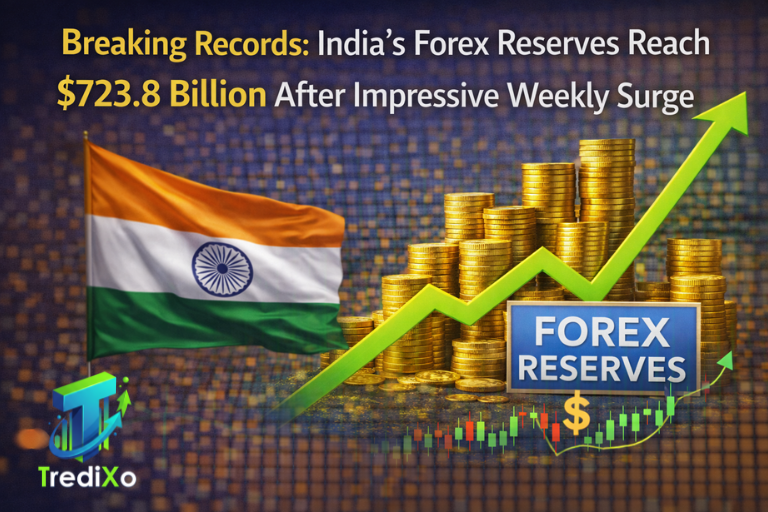
Breaking Records: India's Forex Reserves Reach $723.8 Billion After Impressive Weekly Surge
Introduction to India's Forex Reserves
India's forex reserves have taken a remarkable leap, hitting an impressive $723.8 billion after a significant weekly surge. This milestone not only highlights the strength of India's financial backbone but also reflects the country's growing stature in the global economic arena. With such robust foreign exchange reserves, India is poised to navigate through any financial turbulence while ensuring stability and growth.
As we delve into this exciting development, we'll explore what factors have contributed to this impressive increase, how India stands against other nations regarding forex holdings, and the broader implications for its economy. Whether you're an investor or just curious about global finance trends, understanding these dynamics can offer valuable insights into India's economic health and future prospects.

Factors Contributing to the Surge in Forex Reserves
Several factors have played a role in the impressive surge of India's forex reserves. A robust inflow of foreign direct investment (FDI) has been instrumental, reflecting growing confidence in the Indian economy. Investors are increasingly attracted to India's potential for growth and stability.
Additionally, an uptick in exports has bolstered foreign exchange earnings. This rise can be attributed to a combination of strong global demand and competitive pricing strategies employed by Indian exporters.
The Reserve Bank of India (RBI) also actively intervenes in the currency markets to maintain stability. By buying dollars during times of volatility, they help accumulate more reserves.
Furthermore, remittances from Indians abroad continue to contribute significantly. The steady flow helps cushion against external shocks and enhances overall economic resilience.
These elements together create a favorable environment for accumulating substantial forex reserves that reflect India’s financial health on the global stage.
Comparison with Other Countries' Forex Reserves
When examining India’s forex reserves, it’s essential to place them in a global context. With $723.8 billion, India ranks among the top countries worldwide.
China leads with staggering reserves exceeding $3 trillion. This immense buffer provides China significant leverage in international trade and currency stability. The United States follows closely, bolstered by its status as the world's primary reserve currency holder.
Countries like Japan and Switzerland also maintain robust foreign exchange reserves but fall short of India's figures. Japan's reserves hover around $1 trillion, while Switzerland maintains approximately $1 million for every citizen.

Emerging economies often look to India's growth as a benchmark for their own forex strategies. Such comparisons highlight the importance of sound fiscal management and steady economic policies that contribute to healthy reserve levels over time.
Impact on the Indian Economy
India's forex reserves play a crucial role in stabilizing the economy. When reserves are strong, they provide a safety net against economic shocks. This helps maintain investor confidence and attracts foreign investments.
A robust reserve level also supports the Indian rupee, keeping it stable against major currencies. A stable currency reduces inflationary pressures and encourages consumer spending.
Moreover, higher foreign exchange reserves can enhance India's bargaining power on international platforms. It positions the country as an influential player in global trade discussions.
In addition, these reserves enable better management of external debts. They assure creditworthiness to international lenders, which can lead to lower borrowing costs for both businesses and the government.
The positive ripple effects extend to job creation and economic growth as investments flow into various sectors fueled by this financial strength.
Potential Challenges and Risks Ahead
Despite the recent surge in India's forex reserves, potential challenges loom on the horizon. Global economic fluctuations can destabilize these gains quickly.
Rising inflation rates and fluctuating oil prices may put pressure on foreign exchange stability. India’s heavy reliance on imported crude makes it vulnerable to price hikes.
Additionally, geopolitical tensions can create uncertainties that impact trade balances and foreign investments. Such external factors could lead to abrupt shifts in investor sentiment.
Moreover, maintaining high levels of reserves requires prudent management by the Reserve Bank of India (RBI). Any miscalculation could erode public confidence.
While a robust reserve is beneficial, an excessive accumulation might signal underlying weaknesses in export performance or competitiveness. Balancing growth with reserve maintenance will be crucial moving forward.
Governmental Policies and Actions to Maintain Strong Forex Reserves
The Indian government has implemented various policies to bolster the country’s foreign exchange reserves. One significant strategy involves promoting exports. By incentivizing manufacturers and service providers, India aims to increase its dollar inflow.
Another approach focuses on boosting foreign investments. Simplified regulations for overseas investors have made India an attractive destination. This influx contributes directly to India's forex reserves data.
Additionally, the Reserve Bank of India plays a crucial role in managing these reserves. Through strategic interventions in the currency markets, it stabilizes the rupee’s value, ensuring that excess volatility doesn't erode reserve levels.
Moreover, initiatives like digital payments encourage remittances from abroad. This not only helps families but also adds significantly to India’s foreign exchange reserves.
Ongoing dialogues with international financial institutions ensure that any economic shocks can be managed effectively without depleting existing reserves rapidly.
Conclusion
As these reserves grow, they bolster investor confidence, paving the way for sustainable growth. The stability offered by strong foreign exchange reserves can enhance trade dynamics and attract foreign investments.
However, vigilance is crucial as global economic landscapes continually shift. Fluctuating currencies and geopolitical tensions could pose challenges ahead.
For India to maintain this upward trajectory in its forex position, proactive measures are essential. Policymakers need to navigate potential risks while capitalizing on opportunities within dynamic markets.
In an ever-evolving financial environment, staying informed about trends in India's FX reserves will be vital for investors and stakeholders alike.
FAQ
What are India’s current forex reserves?
As of the latest data, India's forex reserves stand at an impressive $723.8 billion. This figure reflects a significant increase over recent weeks.
How do RBI forex reserves benefit the economy?
The Reserve Bank of India uses these foreign exchange reserves to manage currency stability and conduct monetary policy effectively. This helps in maintaining investor confidence and ensuring economic growth.
Are there risks associated with high forex reserves?
Yes, while substantial reserves can provide stability, they may also indicate inefficiencies in capital allocation or excessive reliance on external factors.
How does India compare globally in terms of foreign exchange reserves?
India ranks among the top countries worldwide for foreign exchange holdings, trailing only behind major economies like China and Japan.
What influences fluctuations in India's FX reserve data?
Factors include trade balances, capital flows, and global economic conditions that affect demand for Indian exports and investments.
Disclaimer
India's foreign exchange reserves have reached an impressive $723.8 billion, showcasing remarkable growth in a competitive global economy. This surge not only reflects the resilience of India’s economic policies but also indicates a solid cushion against any upcoming financial challenges.
As the landscape of forex markets evolves, it’s essential for investors and stakeholders to stay informed about potential risks and government actions that could impact these reserves. With effective management from the Reserve Bank of India (RBI) and proactive fiscal measures, there is optimism regarding India's ability to maintain strong forex reserves moving forward.
The information provided in this article is for educational purposes only. It should not be considered as financial advice or a recommendation to invest in foreign exchange or other assets. Always consult with a qualified financial advisor before making investment decisions based on your individual circumstances. All the credit goes to Tredixo