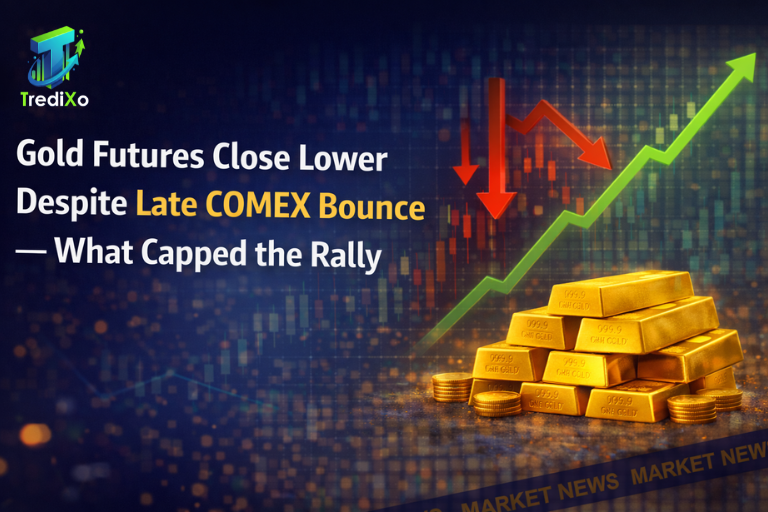
Gold Futures Close Lower Despite Late COMEX Bounce — What Capped the Rally
Introduction
Gold futures have been on quite the rollercoaster lately, and recent market activity has certainly caught the attention of traders and investors alike. Despite a late bounce in COMEX trading, gold futures closed lower, leaving many to wonder what capped this rally. As prices fluctuate amidst various influencing factors, understanding the dynamics at play is crucial for anyone looking to navigate these turbulent waters effectively. With USD strength often casting shadows over precious metals, it's essential to unpack the details behind this recent pullback and explore what it means for future trading strategies. Let’s dive into the world of gold futures and uncover what’s shaping these movements in today’s market.
Understanding Gold Futures and COMEX
Gold futures are contracts that allow traders to buy or sell gold at a predetermined price on a set date in the future. These financial instruments are essential for hedging against price fluctuations, making them popular among investors looking to manage risk.
The Commodity Exchange Inc., commonly known as COMEX, plays a pivotal role in gold futures trading. As part of the CME Group, it is where most gold-related transactions occur. Traders flock to this exchange not just for its liquidity but also for its transparent pricing mechanisms.
COMEX closing prices reflect real-time market sentiments and can influence broader economic decisions. The interplay between supply and demand within this marketplace helps establish benchmarks that guide investors in their trading strategies. Understanding these elements is vital for anyone interested in capitalizing on movements within the gold market.
Factors that Influence Gold Futures Prices
Gold futures prices are influenced by a myriad of factors. Economic indicators play a crucial role. When inflation rises, investors often flock to gold as a safe haven.
Geopolitical tensions also create volatility in the market. Uncertainty can drive up demand for gold, pushing its price higher.
Interest rates cannot be overlooked either. A strong dollar typically weakens the appeal of gold, leading to declines in futures prices.
Supply and demand dynamics add another layer of complexity. Mining output changes or discoveries can alter market perceptions significantly.
Investor sentiment shapes price movements too. Market speculation and trends affect buying patterns, contributing to fluctuations in the COMEX closing prices for gold futures.
Recent Performance of Gold Futures
Gold futures have recently faced significant pressure, resulting in a notable decline. Despite some fluctuations, the overall trend has been downward as traders navigate through various market dynamics.
In the past week, COMEX gold settlement prices displayed volatility. A slight uptick was seen mid-week, but it quickly dissipated amid renewed selling pressure. This instability reflects broader economic indicators and investor sentiment.
Many analysts cite rising USD strength as a contributing factor to this pullback. As the dollar gains traction against other currencies, gold often suffers since it becomes more expensive for foreign investors.
The interplay of inflation concerns and interest rate expectations continues to influence trading behavior. Market participants remain cautious about committing resources amidst uncertainty surrounding future price movements in gold futures.
Analysis of the Late COMEX Bounce
The late bounce in COMEX gold futures caught many traders off guard. After a significant dip, prices rallied briefly before settling lower. This volatility raised questions about market stability.
Many attributed the rebound to short covering from investors who had bet against gold. As prices began to rise, they scrambled to buy back positions, creating upward pressure on the market.
Additionally, fluctuations in global economic indicators played a role. Concerns over inflation and central bank policies often push traders toward safe-haven assets like gold.
However, this bounce was not enough to sustain momentum. The underlying strength of the U.S. dollar continued to weigh heavily on investor sentiment, capping any potential rally for gold futures at COMEX closing prices.
Traders remained cautious amid mixed signals from various international markets, leaving them questioning whether this uptick marked a temporary blip or something more sustained as they navigated through uncertainty.
External Factors that Capped the Rally
Several external factors played a crucial role in capping the recent rally of gold futures. First and foremost, the strengthening U.S. dollar has been a significant influence. As the greenback gains traction, investments in gold become less attractive for international buyers.
Geopolitical tensions also weighed heavily on investor sentiment. Uncertainty surrounding global markets can lead to fluctuations in commodity prices, including gold futures.
Interest rate expectations further complicated matters. Speculation around potential hikes by the Federal Reserve prompted traders to reassess their positions in safe-haven assets like gold.
Additionally, rising yields on U.S. Treasury bonds drew attention away from precious metals. The allure of higher returns elsewhere often diverts capital that might otherwise flow into gold markets.
These intertwined elements combined created an environment where even positive movements could not sustain momentum for long within COMEX closing prices.
Long-Term Outlook for Gold Futures
The long-term outlook for gold futures remains a topic of intrigue among investors. With ongoing geopolitical tensions and economic uncertainties, many view gold as a safe-haven asset.
Inflation concerns may keep demand high. Historically, gold has served as an effective hedge against inflationary pressures. As central banks continue their accommodative policies, this trend could reinforce the appeal of gold in investment portfolios.
Technological advancements in mining and trading can also influence prices. Efficient extraction methods might lead to increased supply but could dilute value over time.
Furthermore, changes in interest rates will play a critical role. A rising USD often puts downward pressure on commodity prices, including gold futures. However, if inflation exceeds expectations or market volatility spikes, we could see renewed interest in this precious metal.
Traders should remain vigilant about these factors while strategizing for potential fluctuations ahead.
Conclusion
Traders navigating the gold futures market should remain vigilant. The recent decline in gold prices highlights the volatility inherent to commodities trading.
Market participants need to consider multiple influences, including economic indicators and currency strength. As USD strength often exerts downward pressure on gold, keeping an eye on exchange rates is essential for informed decision-making.
The COMEX plays a critical role in shaping pricing trends, with closing prices reflecting broader market sentiments. Understanding these dynamics can provide traders with valuable insights.
While short-term fluctuations are part of the landscape, long-term strategies must account for changing global conditions. Staying adaptable will offer opportunities even amidst challenges like recent price pullbacks.
As always, due diligence and ongoing research are key components for success in this ever-evolving field.
Explanation of Gold Futures
Gold futures are financial contracts obligating the buyer to purchase, and the seller to sell, a specific amount of gold at a predetermined price on a future date. These instruments are traded on exchanges like the COMEX.
Investors use gold futures as a way to hedge against economic instability or currency fluctuations. By locking in prices now, they can protect their investments from potential downturns in value.
These contracts provide traders with leverage since only a fraction of the total contract value needs to be deposited as margin. This means that even small movements in gold prices can lead to significant gains or losses.
The appeal of gold futures also lies in their liquidity. Traders participate actively, making it easier for investors to enter and exit positions swiftly based on market conditions.
Factors That Impact Gold Futures
Gold futures are influenced by a myriad of factors that can sway prices significantly. Economic data releases play a crucial role. Reports like employment figures or inflation statistics can boost or dampen demand for gold.
Interest rates also have an impact. When rates rise, gold often sees a decline as investors turn to yield-bearing assets. Conversely, lower interest rates typically strengthen gold's appeal.
Geopolitical tensions and market uncertainties further complicate the landscape. Investors flock to safe-haven assets during crises, pushing up gold prices amid fear and volatility.
Additionally, currency fluctuations cannot be ignored. A strong USD usually results in negative sentiment for gold; after all, it becomes more expensive for holders of other currencies.
Seasonal trends often dictate buying patterns among investors and jewelers alike. These variations create waves within the market that traders must navigate carefully.
Analysis of Recent Market Trends
Recent market trends show a complex landscape for gold futures trading. Despite moments of optimism, prices have faced pressure from various external factors.
The strength of the USD has played a significant role in this decline. As the dollar gains traction, it often leads to a corresponding drop in gold values. Investors tend to pivot to more stable assets when currencies fluctuate.
Moreover, geopolitical tensions and economic indicators continue to sway trader sentiment. Events such as inflation reports or shifts in monetary policy can rapidly alter expectations around gold pricing.
Technical analysis indicates that recent price movements are testing key support levels. Many traders remain cautious amid these fluctuations, reflecting uncertainty about future performance.
Understanding these dynamics is crucial for anyone looking to navigate the complexities of today's market effectively. Keeping an eye on both macroeconomic signals and commodity-specific developments will be essential for forecasting potential moves ahead.
The Role of the COMEX Exchange in Gold Futures Trading
The COMEX, or Commodity Exchange, plays a vital role in the gold futures market. It serves as the primary platform for trading contracts that speculate on future gold prices.
Traders utilize this exchange to either hedge against potential losses or capitalize on price movements. This dual purpose makes COMEX essential for both producers and investors.
Transparency is another key feature of the COMEX. Prices are publicly available, allowing participants to make informed decisions based on real-time data.
Additionally, liquidity is significant here. The high volume of trades ensures that entering and exiting positions can be done quickly without impacting prices dramatically.
Regulations also help maintain trust in the system. These guidelines protect traders from fraud and manipulation, fostering a stable environment conducive to investment.
In essence, the COMEX acts as a cornerstone for global gold futures trading dynamics.
What Caused the Late COMEX Bounce?
The late COMEX bounce in gold futures caught traders off guard. A surge of buying interest emerged as investors attempted to capitalize on lower prices, leading to a brief rally.
Some market participants viewed this dip as an opportunity rather than a signal for further declines. The allure of gold's safe-haven status amplified the urgency among buyers worried about economic uncertainty.
Additionally, technical indicators showed signs of overselling conditions, prompting a rebound as momentum shifted slightly in favor of bulls. This uptick was short-lived though and did not indicate sustained strength.
Despite the temporary reprieve, ongoing uncertainties overshadowed the gains made during that trading session. Traders remained cautious amid persistent USD strength impacting gold negatively and limiting any potential upside from the bounce experienced at COMEX settlement.
Potential Future Outlook for Gold Futures
The future outlook for gold futures remains a topic of keen interest among traders and investors. As market dynamics shift, several factors could influence upcoming trends.
Economic indicators will play a crucial role in determining gold's trajectory. Inflation rates, geopolitical tensions, and central bank policies can all sway investor sentiment toward safe-haven assets like gold.
Additionally, the strength of the US dollar continues to be a key player. A stronger USD typically exerts downward pressure on gold prices, making it essential for traders to monitor currency fluctuations closely.
Investor appetite also matters significantly. If global uncertainty persists or escalates, demand for gold as a protective asset may rise once more.
Technological advancements in mining and production could affect supply levels too. These elements combined create an intricate landscape that requires careful navigation by those involved in trading gold futures.
Conclusion and Recommendations for Traders
Traders navigating the complexities of gold futures should remain vigilant. The recent decline highlights the importance of staying informed about market dynamics. Monitoring COMEX closing prices is vital for making educated decisions.
Considering external factors, keep an eye on USD strength, as it often drives gold price pullback trends. Understanding these influences can provide insights into future movements.
Utilizing technical analysis and setting stop-loss orders could mitigate potential losses during downturns. Diversifying portfolios with other assets may also prove beneficial in uncertain times.
Engaging with current news will help traders anticipate market shifts. Awareness of economic indicators related to inflation and interest rates can further enhance strategic positioning in the gold futures market.
FAQ
When diving into the world of gold futures, questions are bound to arise. Curious traders often want to know how market movements influence prices.
One common query is about the relationship between USD strength and gold values. As the dollar strengthens, it generally leads to a gold price pullback since investors tend to flock towards currencies over commodities.
Another frequent question regards COMEX closing prices. Many seek clarity on how these settlement figures affect trading decisions and future forecasts in the precious metals market.
Investors also wonder about timing—when is the best moment to enter or exit positions? Understanding market trends can offer insights but requires constant analysis and adaptability.
Newcomers often inquire about risk management strategies within this volatile space. Navigating through uncertainties while protecting investments remains a top priority for many traders engaging with gold futures.
Disclaimer
The information provided in this article is for educational and informational purposes only. It should not be construed as financial advice or a recommendation to buy or sell any securities, including gold futures. Trading in commodities involves substantial risk and may not be suitable for all investors. Always conduct your own research and consider seeking advice from qualified professionals before making investment decisions based on market trends or price movements. The author does not guarantee the accuracy of the data presented nor the outcomes related to trading activities discussed herein. All The credit goes to Tredixo