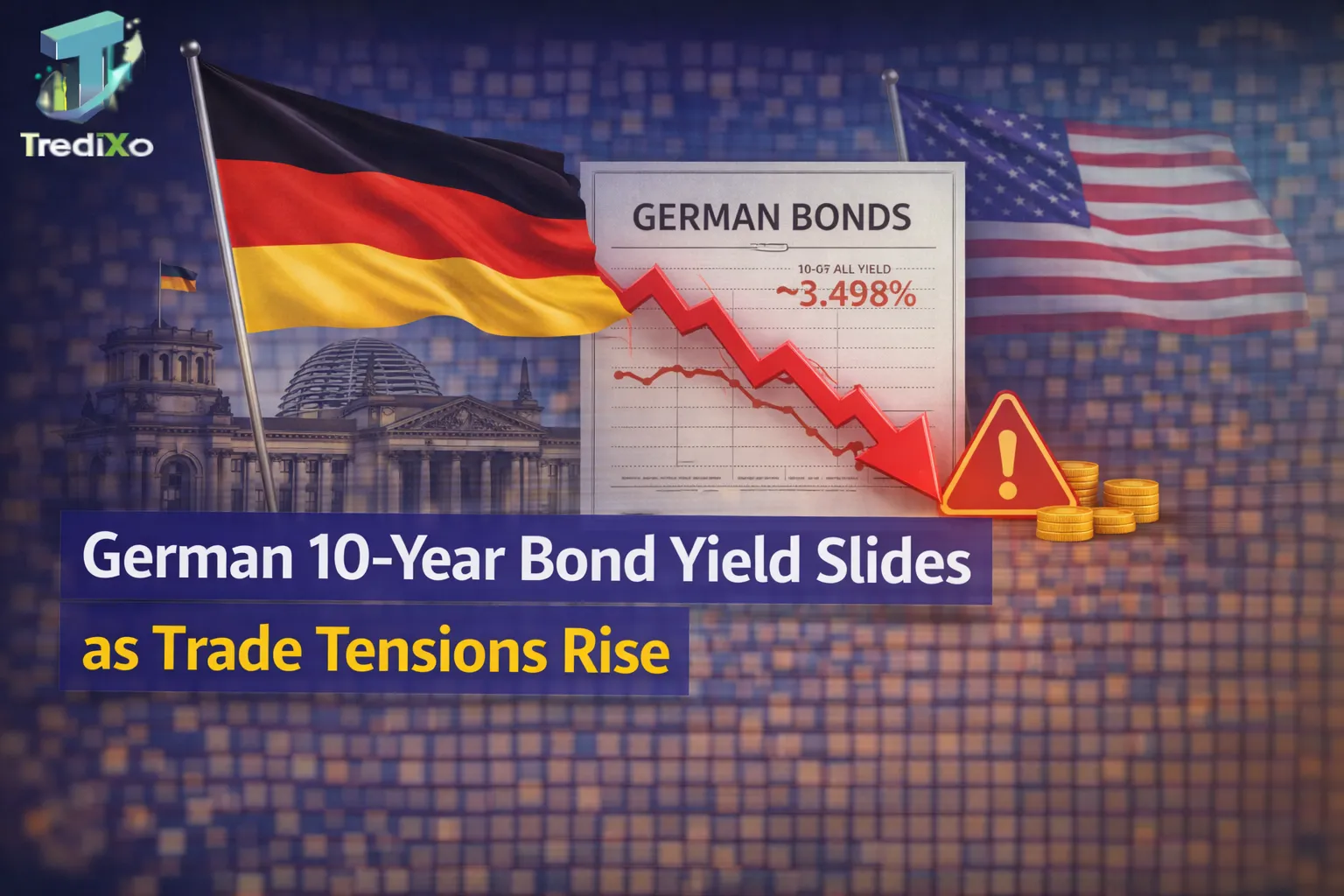
German 10-Year Bond Yield Slides as Trade Tensions Rise

The German 10-year bond yield declined in recent trading sessions as growing global trade tensions pushed investors toward safer assets. The drop in yields highlights rising concerns about economic uncertainty and the potential impact of geopolitical developments on the European economy.
Germany’s benchmark 10-year bund yield, often seen as a key indicator for the broader Eurozone bond market, fell as investors increased their demand for government bonds. When demand for bonds rises, their prices increase while yields move lower. This shift reflects a classic safe-haven buying pattern, where investors move funds away from riskier assets such as equities and into more stable government securities.
The recent decline in German bond yields comes amid renewed uncertainty surrounding global trade policies. Ongoing discussions about tariffs and international trade restrictions have raised fears that economic growth could slow if tensions escalate further. German government bonds these concerns have prompted market participants to reassess their portfolios and reduce exposure to riskier investments.
In addition to trade tensions, investors are closely watching economic data from the Eurozone. Indicators such as industrial production, inflation trends, and business confidence are playing a crucial role in shaping expectations for the region’s economic outlook. If growth momentum weakens, it could reinforce demand for safe-haven assets like German government bonds.
Conclusion
The fall in the German 10-year bond yield highlights the growing impact of global trade tensions on financial markets. As investors seek safer assets amid uncertainty, demand for German government bonds has increased. Going forward, the direction of yields will depend on developments in global trade policies, economic data from the Eurozone, and signals from central banks. All credit goes to Tredixo .
FAQ
1. What is the German 10-year bond yield?
The German 10-year bond yield refers to the interest rate investors earn on Germany’s benchmark 10-year government bond, commonly known as the bund.
2. Why do bond yields fall during trade tensions?
During periods of uncertainty, investors often buy safe-haven assets like government bonds. Increased demand pushes bond prices up and yields lower.
3. Why is the German bund important for global markets?
Germany has the largest economy in the Eurozone, and its bonds are considered among the safest in Europe. Therefore, bund yields are widely used as a benchmark for European debt markets.
4. How do trade tensions affect financial markets?
Trade tensions can create uncertainty about economic growth, supply chains, and corporate profits, leading investors to shift toward safer assets.
5. What factors influence German bond yields?
German bond yields are influenced by economic data, inflation expectations, central bank policies, investor demand for safe-haven assets, and global geopolitical developments.